



Jun 09, 2026 When Animals in Crisis Unite the World: Lessons Across Time
For animals in distress, the fate of a single animal can remove geopolitical borders, render differing ideologies unimportant, connect disparate institutions, and create coalitions that would not otherwise collaborate. From Cold War adversaries to today’s networks of scientists, policymakers, and private actors, responses to animals in distress have consistently demonstrated humanity’s capacity for cooperation. However, these instances also reveal an important lesson: compassion alone is insufficient. The Herculean challenge lies in translating that compassion into effective, coordinated, and evidence-based action, which is essential for improving future rescue efforts.
Prime-time examples of this dynamic arise from whale rescues, where the visual impact of large, intelligent marine mammals struggling in shallow water has often drawn global attention. Three marine mammal rescue cases spanning several decades have been selected to explore human responses and rescue results, and how future responses can be leveraged to achieve long-term, sustainable outcomes.
Operation Breakthrough in 1988 involved rescuing three gray whales (Eschrichtius robustus) trapped in sea ice off the northern coast of Alaska. The Inupiat names and English nicknames were: Putu (Crossbeak), Siku (Bone), and Kanik (Connet). This operation became a notable rescue effort for its international cooperation, the bringing together of indigenous communities, and the cooperation of various U.S. federal agencies, environmental groups, and Soviet Union icebreakers. Despite geopolitical tensions between the U.S. and the Soviet Union, this operation illustrated how concern for animals can overcome political divides and serve as a basis for collaborative action, even if only temporarily.
What makes Operation Breakthrough particularly relevant today is not just its dramatic success, but the demonstration that collaboration among a large group of nations, agencies, scientific experts, local communities and other involved stakeholders is possible. Equally important, the diversity of these resources was needed. Because geopolitical dynamics continue to shift, complex emergencies require maintaining the ability to coordinate across sectors, countries, and disciplines.
A decade after Operation Breakthrough, Keiko, a captive orca (Orcinus orca) – the largest member of the dolphin genus – was made famous by the 1993 film Free Willy, capturing global attention with a different focus. In this case, the public expressed concern about his substandard conditions of captivity and poor health at a Mexican aquarium. This generated an international call that led to one of the most ambitious animal rehabilitation efforts ever undertaken, involving governments, nonprofit organizations, scientists, and private donors across multiple countries. Keiko was initially transported from Mexico to an aquarium in the northwestern United States for rehabilitation. When Keiko regained his health, and it was deemed safe to move him, Keiko was transported to a specially constructed island cove in Iceland, where he was gradually reintroduced to open-ocean conditions by being taken for “walks” behind a boat.
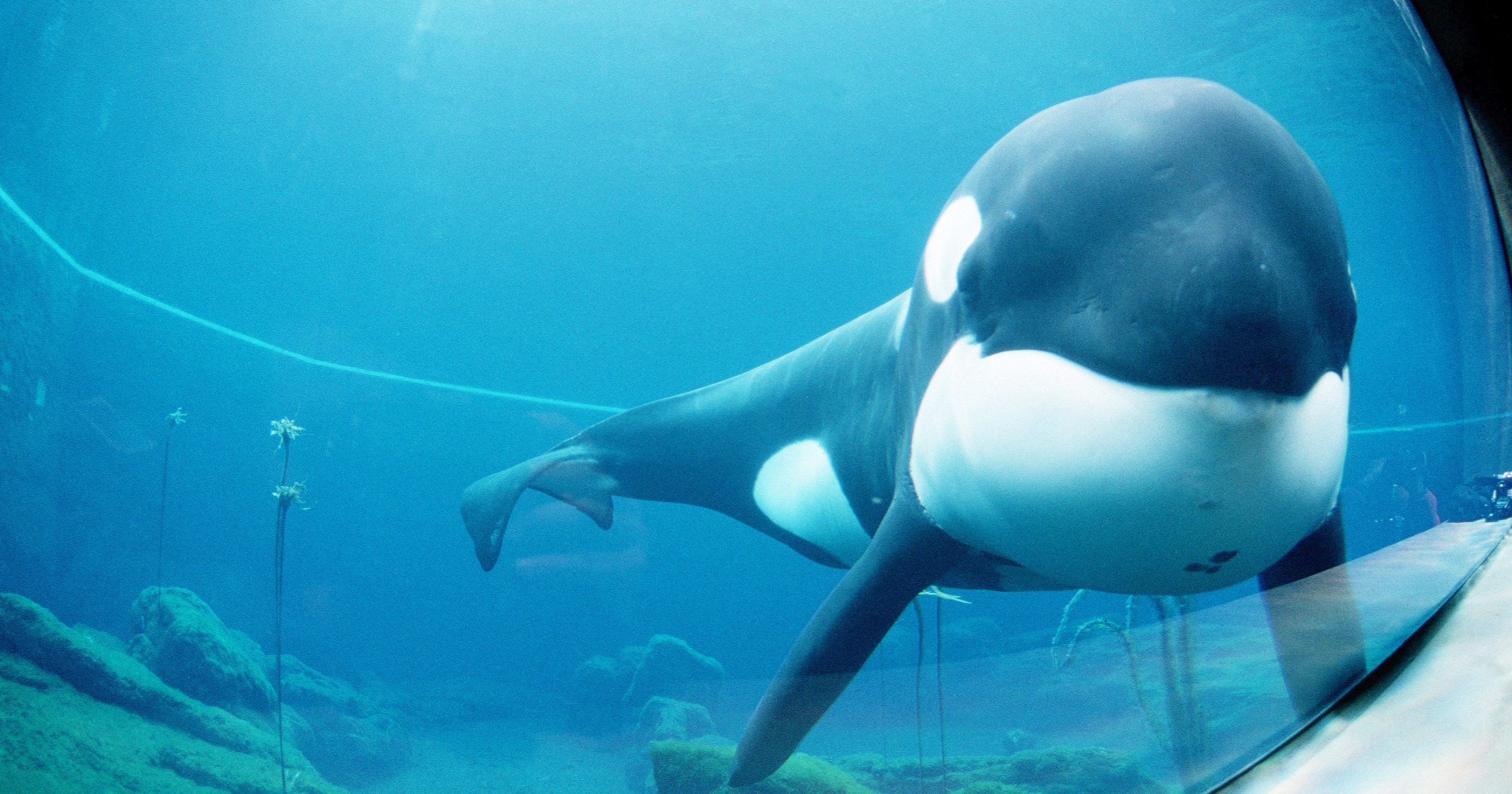
Keiko, the killer whale and star of the film “Free Willy,” as he swims around in his tank prior to being moved from Newport, Oregon to Westman Islands, Iceland. Credit: U.S. Department of Defense, via Wikimedia Commons
Keiko eventually decided to swim off into the North Atlantic during one of his “walks.” However, he never joined a wild orca pod and ended up in a Norwegian fjord, where he again interacted with humans before succumbing to pneumonia. Keiko’s outcome underscores the limitations of even the most well-resourced efforts.
One powerful ‘lesson learned’ from Keiko’s story is the incredible mobilizing impact of public empathy, even from those who previously had no particular interest in marine conservation. Millions followed the story of Keiko, and the global awareness spurred innovation in whale rehabilitation and raised critical questions about animal captivity, welfare, and the feasibility of returning long-term captive wild animals to their native ecosystems.
Whether or not Keiko’s reintroduction to the wild was successful has been contested. Some people argue, pointing to his death in a Norwegian fjord, that it was a failure, while others contend it was a success. Reintroduction supporters point to Keiko’s journey across the North Atlantic, where he reportedly engaged in diving to feed. He eventually arrived in a Norwegian fjord, where he chose to stay and interact with human tourists for a year before succumbing to pneumonia. His journey serves as both an inspiring testament to coordinated global action and a reminder that good intentions do not always guarantee the best outcomes.
Fast forward more than two decades to the recent case of Timmy, a humpback whale (Megaptera novaeangliae) stranded in the Baltic Sea in 2026. After repeatedly becoming trapped in shallow waters, Timmy became the focus of a highly publicized rescue effort involving marine biologists, local authorities, private funders, and volunteers. Once again, the public closely monitored the complex and resource-intensive operation through media coverage and livestreams.
Timmy was eventually loaded into a water-filled barge and transported into the North Sea above Skagen, Denmark, where he was released. Tragically, he was later found dead, raising serious concerns and debates among experts about whether the intervention had actually helped or inadvertently prolonged Timmy’s suffering. This case again underscores the importance of coordinated, evidence-based decision-making, grounded in global knowledge of rescues, to avoid unintended harm and improve outcomes.
All three rescues illustrate the powerful attraction these large sea mammals have on public attention and empathy. However, none of the three rescues resulted in an uncontested, successful outcome. The lessons drawn from these historical and current incidents highlight a need for a more coordinated and informed approach to animal rescues, combining compassion with effective strategies. As we continue to navigate the complexities of animal welfare and conservation, we must build on global knowledge of rescues, ensure this knowledge is available worldwide, and leverage the collective power of stakeholders. We need to ensure our efforts are not just well-intentioned but also successful and sustainable in the long term.
Image credit: David Copithorne, iStock