


Jun 21, 2026 The Lion’s Historian: Africa’s Animal Past by Sandra Swart
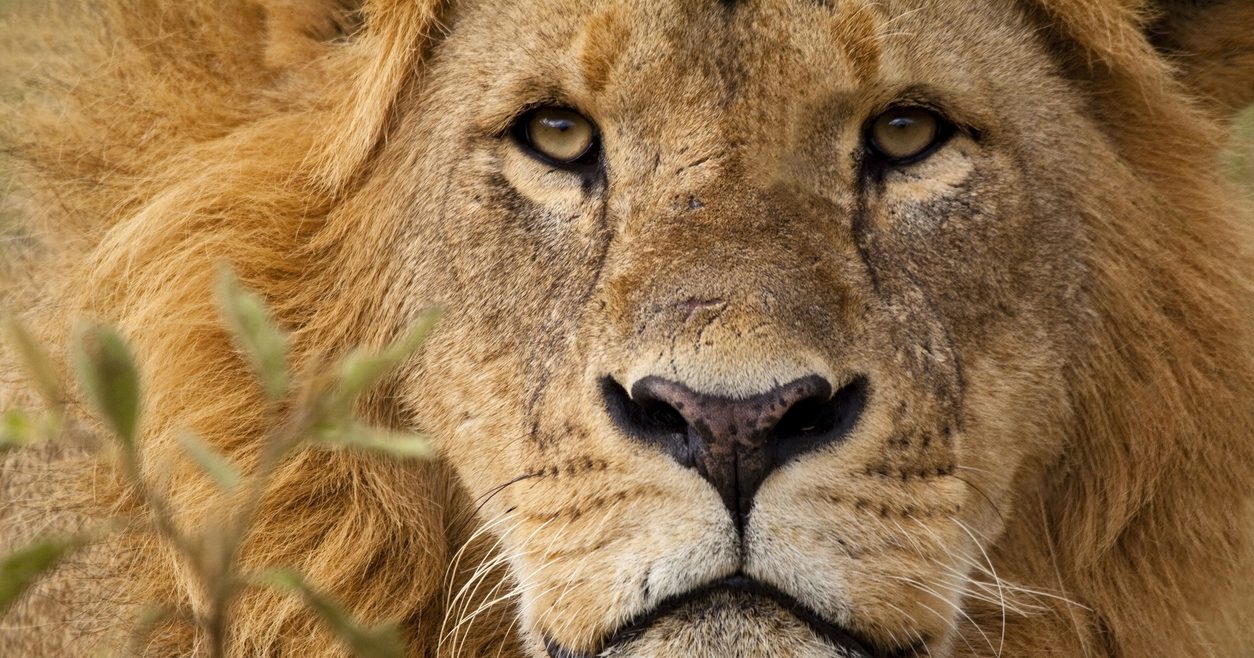
Until the lion has a historian of his own, the tale of the hunt will always glorify the hunter.
This African proverb inspires the title of Professor Sandra Swart’s book, as she sets out to take on the challenge of writing a multi-species history that does not glorify the hunter. Professor Swart from Stellenbosch University, South Africa, successfully produces a compelling multispecies history of Africa. As such, she joins a small but distinguished group of historians and social scientists who have employed an animal lens to examine the roles, agency and social science of animals in human society.
Professor Swart’s book explores the history of human-animal relations, highlighting the agency of a wide range of animal species, including lions (with a specific focus on maneaters), elephants, okapi, the extinct quagga (a zebra-like species), horses, South African police dogs, and even termites. She convincingly argues that animals have intersected with and influenced human history. For example, her chapter on horses discusses their essential role in European settlement in southern Africa. Horses were later adopted by certain enterprising individuals among the indigenous people, particularly Moshoeshoe, a Basotho chief. He utilized the sure-footed Basotho pony to provide his warriors with mobility and range, ultimately laying the groundwork for what would become the nation of Lesotho. Swart’s 2010 book, Riding High: Horses, Humans and History in South Africa, provides more background and detail on how horses have shaped human history on the continent.
Swart uncovers a fascinating range of human-animal relationships or cultures across Africa, using these insights to offer stimulating new ways to view a multi-species history of Africa – and the world. As the anthropologist Claude Levi-Strauss once remarked, ‘Species are chosen not because they are good to eat, but because they are good to think.” That statement has subsequently been reduced to ‘animals are good to think with,’ interpreting animals in totemic systems as not merely symbolic or culinary objects, but also as helping structure human thought and societies in defining boundaries. Swart references Levi-Strauss’ dictum toward the conclusion of her book, and this reviewer notes that Swart’s multi-species historical investigations exemplify the wisdom of Levi-Strauss’ 1962 observation.
Despite Swart’s concerns about potential resistance to her thesis that animals have a role in human historical scholarship, she has persevered. The field is growing steadily, and several other historians have explored the role of animals in human society. Admittedly, many of these histories focus on how humans have approached specific human-animal topics from a human perspective. For example, Harriet Ritvo from MIT investigates dog breeding, while KC Grier from the University of Delaware and Kathleen Kete from Trinity College, Connecticut, explore pet keeping; additionally, Arnold Arluke from Northeastern University and R.D. French have produced insightful and original works analyzing the factors underlying anti-vivisection sentiment in modern society. The field of animal history has now reached a crucial stage of potential scholarly acceptance – the launch in 2025 of the academic journal Animal History, published by the University of California Press.
Swart notes some of the early challenges she encountered while studying the connections between human and animal histories. Despite these difficulties, she persevered and presents her findings in this volume, arguing that animals possess agency, cultures, and histories. She moves across time scales from the recent to the ancient millennia and explores several knowledge systems, including ecological and indigenous perspectives. Swart argues that “animal history can advance a ‘usable past’ that helps both humans and animals in the present.” She hopes to reach a wide audience and states she is “eager for a hungry and omnivorous readership.” Both historians and animal advocates would benefit from reading her latest book.
Image Credit: WLDavies, iStock