


Jun 21, 2026 From Free Fall to Soft Landing: The Hidden Science of Cats
A recent scientific paper explains why cats can right themselves when falling, so they always land on their feet. How they managed this feat had been a mystery, but Yasuo Higurashi and his colleagues report that they have solved it. Cats, it turns out, have a very flexible thoracic region of their backbone, running from their shoulder blades to the end of their rib cage. This flexibility underlies a cat’s ability to right itself in mid-air so that, when falling, they land on their feet.
This ability was highlighted by an observation made by New York City veterinarians about fifty years ago, describing what has become known as the cat High-rise Syndrome – namely, that cats falling from higher stories (above the seventh floor) in New York’s skyscraper landscape had fewer injuries than those falling from lower stories. A cat’s ability to fall from remarkable heights and survive is also due to its ability to spread its limbs out to create a parachute effect. An average-sized cat will reach a terminal velocity of around 60 miles per hour. That is the velocity where the downward pull of gravity is counterbalanced by the cat’s friction while falling through the air. For comparative purposes, a human’s terminal velocity is around 120 miles per hour, while a parachute slows it to 15-30 miles per hour) Finally, cats also have very flexible limbs and ligaments, allowing them to absorb the impact of landing more effectively.
Since the initial report in 1976 and follow-up studies a decade later, numerous papers, including the 2025 German study, have described the typical injuries sustained by cats that fall from high balconies and apartment windows. A cat may survive the fall, but depending on the substrate where the cat lands, the animal will typically experience a range of adverse outcomes, including broken bones, dislocated joints, broken teeth, a bruised face and serious lung injuries. Around half of cats with high-rise syndrome will experience respiratory distress. Typically, a cat that has fallen from several stories or more will need to be seen by a veterinarian for shock management, evaluation for internal injuries and possible treatment.
One of the highest recorded falls a cat survived was from a 32nd-floor apartment. Just a few weeks ago, a cat was reported to have survived a 14-story fall from an apartment in Melbourne, Australia. Somewhat surprisingly, the cat did not fall to the ground but fell from a 20th-floor apartment to a 6th-floor balcony. The owners of the 6th-floor apartment heard meowing from their balcony and, upon investigating, found the cat, Mont Blanc. Mont Blanc reportedly only suffered a minor punctured lung injury from the fall.
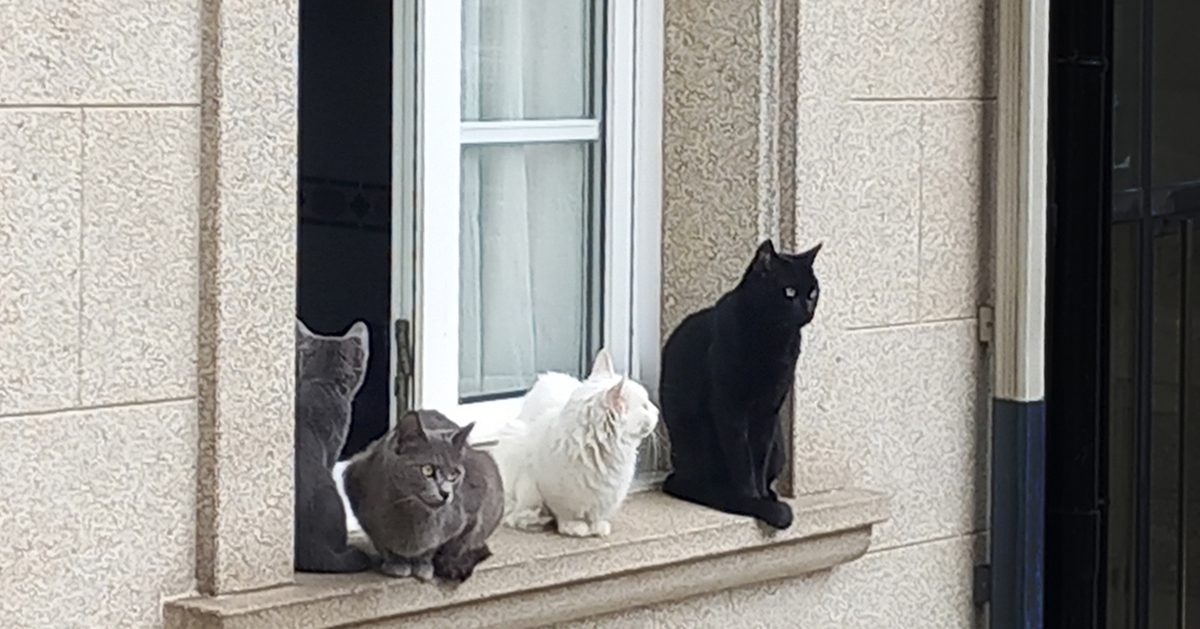
While a cat’s ability to right itself and survive a fall is remarkable, it should not be mistaken for invulnerability. High-rise syndrome remains a serious and sometimes life-threatening condition, and even seemingly minor falls can lead to significant injury. The lesson for cat guardians is clear: prevention is essential. Secure windows, enclosed balconies, and careful supervision can make the difference between a curious moment and a medical emergency. Understanding the science behind a cat’s fall not only deepens our appreciation for their unique biology but also reinforces our responsibility to protect their health and well-being.
Image Credit: Mercedes Ranaño Otero, iStock