


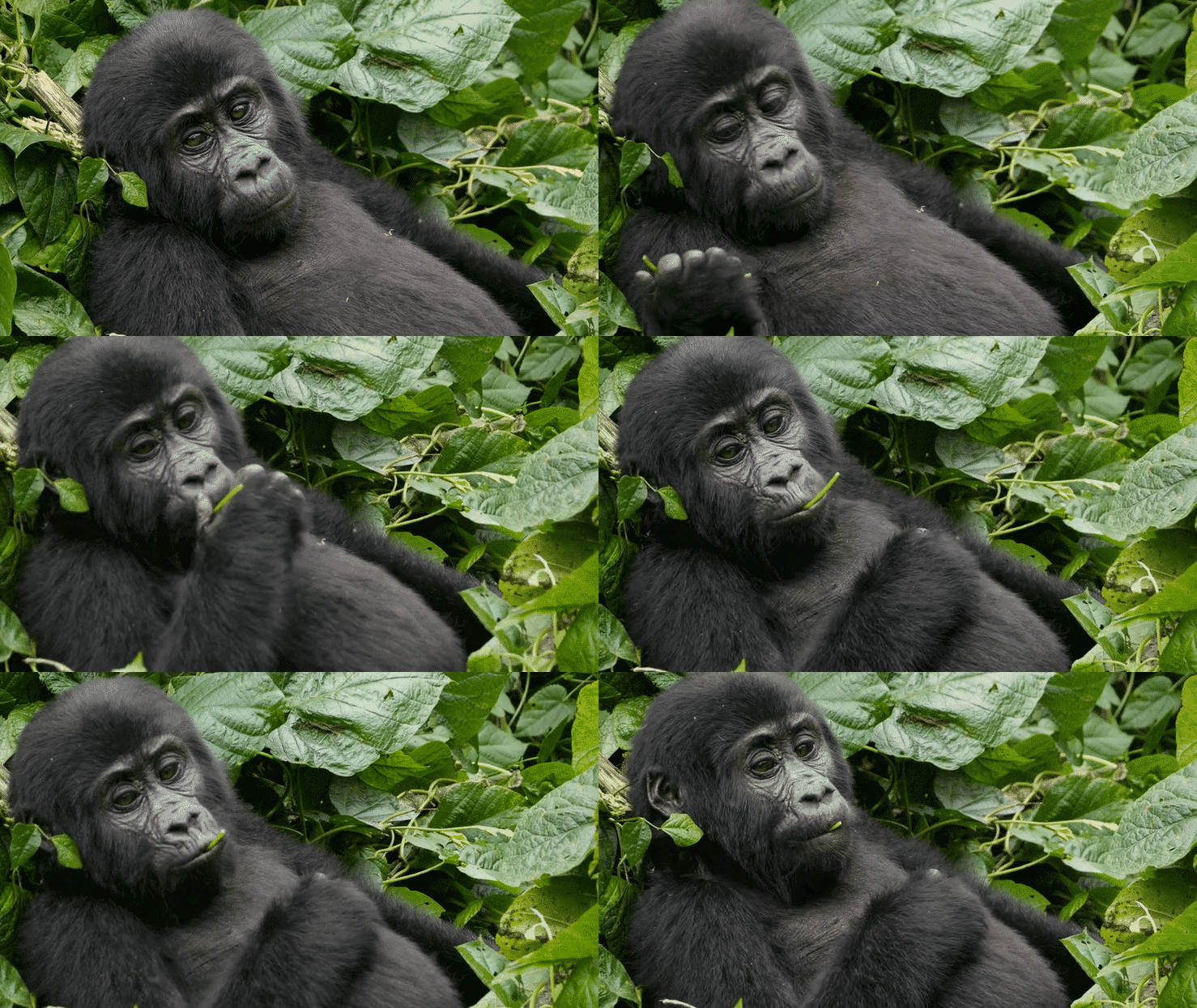
May 26, 2026 Gorillas of the Virunga Mountains: Survival in a Landscape of Conflict
High in the mist-covered slopes of the Virunga Mountains—where Rwanda, Uganda, and the Democratic Republic of Congo meet—lives one of the world’s rarest animals: the mountain gorilla. It is a conservation success story that these great apes still exist. Their numbers have nearly quadrupled to 1,063, a remarkable achievement given decades of war, political instability, and human encroachment.
A Rare Conservation Success
Just a few decades ago, the future of mountain gorillas seemed bleak. In the 1970s and early 1980s, fewer than 300 individuals remained in the Virunga ecosystem. Today, that number has risen to approximately 1,063 across the broader Virunga landscape and nearby forests—one of the only instances in which a great ape population has increased in the wild. This recovery reflects decades of sustained conservation work: daily monitoring by rangers, veterinary care, cross-border collaboration, and carefully managed ecotourism. Together, these efforts have driven an extraordinary rebound since the late 1980s. Yet this success is fragile. The Virunga Mountains remain embedded in one of the most politically volatile regions on Earth.
Conflict at the Heart of the Ecosystem
Unlike many conservation stories, the fate of the Virunga gorillas cannot be separated from geopolitics. The eastern region of the Democratic Republic of Congo (DRC), around Goma in particular, continues to experience active armed conflict involving government forces, militias, and rebel groups such as the March 23 movement (M23).
These conflicts have a direct impact on conservation:
- Ranger patrols are disrupted or suspended in insecure areas;
- Monitoring posts are abandoned; and
- Access to key parts of the transfrontier Virunga park is restricted.
The risks extend beyond wildlife. Conservation itself has become a dangerous profession in Virunga: more than 200 park rangers have been killed protecting the park over the past 100 years. In this context, protecting gorillas is not simply a matter of biology—it is inseparable from human security, governance, and economic opportunity.
Building a Culture of Conservation
Despite the epidemics of violence in and around Rwanda, the country has built a culture of wildlife conservation that has successfully protected vulnerable mountain gorilla populations. For example, an annual Kwita Izina ceremony, basically a human ceremony to name newborn infants, was established in 2005 to name baby gorillas. It has now become a national cultural event that celebrates the birth of mountain gorillas and firmly embeds gorilla conservation into Rwandan national identity.
Rwanda has expanded and strengthened protected areas, such as its Volcanoes National Park. Tourist revenues, the amount available is announced at the annual Kwita Izina ceremony, are shared with communities bordering conservation areas where the funds support the construction of schools, health clinics and other community projects. On the last Saturday of every month, all Rwandan adults are expected to participate in a nationwide day of community service. Such service ranges from planting trees to rehabilitating public spaces, but it also nurtures shared civic pride and a sense of responsibility for environmental health. Plans are underway to expand Volcanoes National Park and restore 2 million hectares of deforested and degraded land by 2030. Hillsides in northern Rwanda that had been stripped bare now bloom with native trees and cultivated fields, helping to sequester carbon and improve soil fertility, water quality and biodiversity.
Rwanda’s approach identifies the country as an environmental leader in Africa, if not the world, while 10% of the national GDP is generated by tourism, especially gorilla tourism.
The survival of the Virunga mountain gorillas is often celebrated as a rare conservation success, but it is more accurately understood as an ongoing achievement—one that must be earned every day. Their future depends not only on continued ecological stewardship but also on peace, governance, and sustained investment in the communities that share their landscape. In the Virunga Mountains, conservation is not separate from human well-being; it is inseparable from it. Ensuring that both people and wildlife can thrive will determine whether this remarkable recovery endures.
Video credit: BlackBoxGuild, iStock-1746165906