


Mar 12, 2026 Evolving Animal Welfare Standards in American Veterinary Medicine: Controversies and Challenges
Veterinarians are widely recognized as experts in animal welfare; however, veterinary curricula in America have only recently begun to include lectures and classes specifically focused on this topic, with significant developments over the last 20 to 30 years. When the Pew Trusts launched their project on veterinary education from 1988 to 1993, all veterinary schools were requested to create strategic plans outlining their future goals. Of 26 veterinary schools, only 6 included animal welfare in their strategic plans, and 3 of those 6 viewed it primarily as a threat. Today, largely due to both implicit and explicit student demand, animal welfare has become an integral part of educational programs at most veterinary institutions.
Changes in animal welfare standards can be examined by looking at how the American Veterinary Medical Association (AVMA) has addressed animal euthanasia, a crucial point of interaction between pet owners and their local veterinary practices. In 1963, the AVMA published its first formal guide on the euthanasia of animals, focusing on dogs, cats, and small mammals. This initial edition outlined the fundamental principles for ensuring a quick and painless death. The most recent AVMA Guidelines for the Euthanasia of Animals, 2020 edition, is a comprehensive and scientifically supported report on how to euthanize various animal species quickly, painlessly, and without distress.
There have been controversies along the way. For example, concerns surrounding the use of carbon dioxide for euthanizing small rodents in animal laboratories were raised about its aversive nature about twenty to thirty years ago. These concerns lead to multiple projects examining its impact and reviewing feasible alternative approaches. The most recent 2020 guidelines for euthanasia now include specific recommendations for exposing small rodents to carbon dioxide. These new guidelines, supported by rigorous scientific studies, aim to minimize animal distress and pain while ensuring a swift loss of consciousness and death.
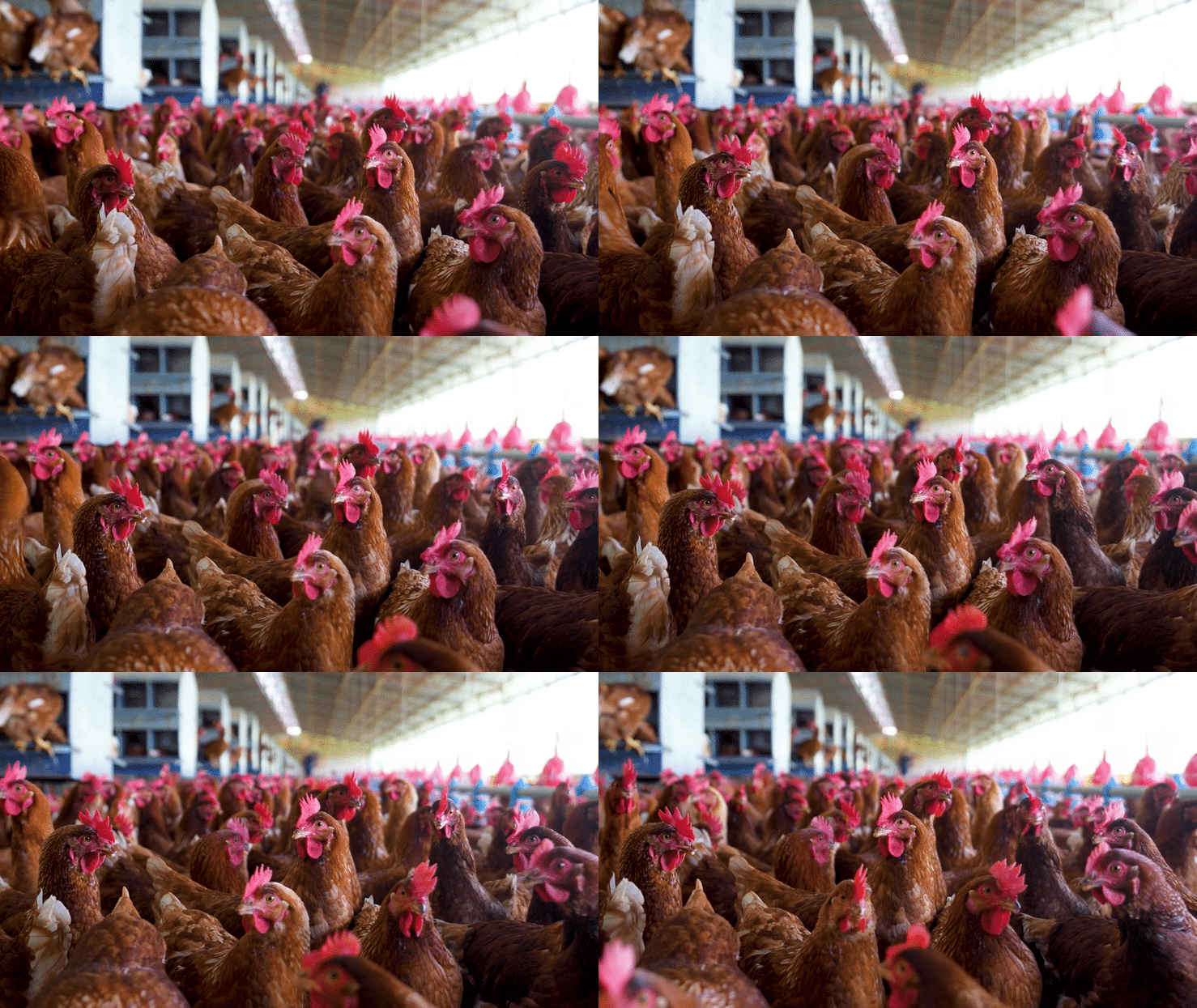
The American veterinary profession is currently experiencing a significant divide over the issue of how to kill large numbers of confined farmed animals. The AVMA has recommended a method called VSD+, which stands for Ventilation Shutdown Plus. This method involves sealing a building that houses thousands, or even tens of thousands, of farmed animals, then introducing carbon dioxide and heat into the environment. It’s important to note that VSD (no heat) and VSD+ are not classified as euthanasia methods; instead, they are referred to as “depopulation” methods because the animals can take an hour or longer to die.
While there are alternatives to VSD and VSD+, each comes with its own set of challenges. The process of killing large numbers of animals within a farm building is complicated, and often, economic factors and convenience take precedence over animal welfare.
The AVMA acknowledges that ventilation shutdown is not an ideal method; however, the organization considers it an acceptable option in certain situations for swine and poultry facilities. The most recent edition of the AVMA Guidelines for the Depopulation of Animals – 2026 Edition, includes more humane methods for depopulation, such as spraying animals with nitrogen-infused foam. In contrast, attitudes among European veterinarians towards ventilation shutdown with gas (VSD+) are largely negative. For instance, the British journal, Veterinary Record, published an editorial opposing VSD+ in February 2023 (Vol. 192, Issue 4).
The development of the VSD+ guidelines has been sparked, in part, by the global spread of the highly pathogenic avian influenza (HPAI) virus. Over three hundred million farmed chickens, along with millions of turkeys, ducks, and geese, have been culled worldwide because of infections caused by the HPAI virus. Culling has traditionally been regarded as the most effective method for eliminating ongoing infections in farmed animals. For instance, in 2001, the outbreak of foot-and-mouth disease among farmed animals in the UK was controlled by culling 6 million cows and sheep throughout Britain.
However, the culling approach may need to be reevaluated, as the HPAI virus has become endemic in Europe and is likely to be endemic in North America as well. Additionally, the virus has killed millions of wild birds. The World Organization for Animal Health (WOAH) has described the current situation regarding the HPAI virus as unprecedented, even though experts have been warning the world of a potential spread of avian influenza viruses for forty years. The 1918 Spanish Flu, which resulted in the death of an estimated fifty million people, around 2.5% of the world’s population, was caused by an avian flu virus strain.
Challenges arising from intensive animal agriculture are not only deepening divisions within the United States’ professional veterinary community but also causing significant environmental problems. Over the past decade, animal agriculture has been recognized as a major threat to climate change, biodiversity, global forests, the effectiveness of antimicrobial drugs, and a sustainable planetary food system. Beyond such environmental concerns, modern intensive animal agriculture systems represent a moral atrocity due to the immense suffering inflicted on the billions of animals involved in the industry. Like the animals, the United States veterinary profession is also struggling with the practical consequences of raising and killing billions of animals each year for human consumption.
Video credit: Hispanolistic, iStock