


May 13, 2026 Brain Organoid Ethics
A New Frontier in Brain Science and Ethics
Recent advances in stem-cell biology have enabled scientists to grow organoids—three-dimensional clusters of human cells that mimic aspects of real organs. Among these, brain organoids stand out. These lab-grown neural tissues offer unprecedented insight into human brain development and neurological disease.
At first glance, organoids seemed to ease earlier ethical concerns about stem-cell research. Because they can be derived from adult cells rather than embryonic tissue, many debates about fetal sourcing have diminished. However, brain organoids have introduced a new set of ethical challenges—ones that may be even more complex.
As these structures become more sophisticated—developing organized neural networks and electrical activity—questions emerge: Could they ever become sentient? What moral status might they deserve? And how should society regulate research that blurs the boundary between a biological model and something potentially more?
This article argues that brain organoids represent not just a scientific breakthrough, but an ethical inflection point. Addressing questions of consciousness, consent, ownership, and governance now is critical, before the technology advances beyond our capacity to respond responsibly.
What Brain Organoids Are (and Are Not)
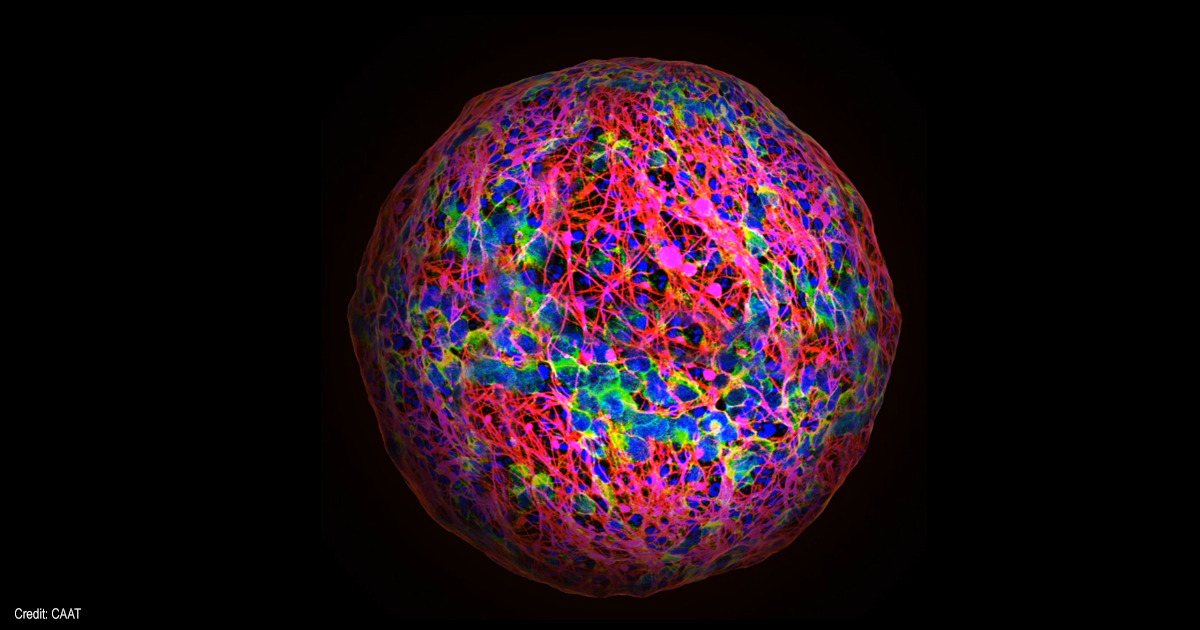
Brain organoids are self-organizing clusters of neural cells derived from pluripotent stem cells. They can reproduce certain features of early brain development, including layered structure and neural activity patterns. Researchers use them to study diseases such as Alzheimer’s and autism in ways that are not possible with animal models or traditional cell cultures.
Importantly, brain organoids are not miniature brains. They lack sensory input, connections to a body, and the full complexity of a functioning nervous system. Still, advances are rapid. Some studies have demonstrated increasingly complex neural signaling, while others explore “organoid intelligence”—combining brain organoids with computational systems to simulate learning processes.
As described in this overview of brain organoid ethics and organoid intelligence, the field is evolving quickly, raising ethical and governance questions alongside scientific innovation.
The central tension is clear: the closer these models come to replicating real brain processes, the more ethically complicated their use becomes.
Core Ethical Challenges
The most provocative ethical question concerns consciousness. Could brain organoids ever develop the capacity for sentience or subjective experience? At least one neuroscientist argues that current brain organoids are far from achieving consciousness. However, uncertainty remains—and uncertainty matters ethically. As discussed by Lavazza & Reichlin (2023), even the possibility that brain organoid cultures may develop sentience raises questions about how such entities should be treated.
The challenge is compounded by the fact that science has no agreed-upon test for consciousness—even in animals. Detecting it in simplified, lab-grown tissues is even more difficult. This creates an ethical uncertainty, where researchers must decide how to proceed without clear answers. Ethicists have argued for a precautionary approach: even if the likelihood of consciousness is low, the moral stakes are high enough to justify additional safeguards.
Rethinking Consent
Brain organoids are typically created from donated human cells—often skin or blood samples. While this seems straightforward, the downstream uses of these cells can be complex and unpredictable, as the cell biopsy of a cervical tumor taken from Henrietta Lacks in 1951 illustrates. Those cells, now termed HeLa cells, divide every 20-24 hours and are immortal and have become a mainstay of biomedical research. However, Henrietta Lacks and her family were never informed nor compensated for the use of her cells. The case has influenced the evolution of modern research ethics.
Donors may not anticipate that their cells could be used to generate neural tissue, integrated with computational systems, or implanted into animals. As noted in this 2024 discussion of consent challenges in organoid research, traditional one-time consent may not adequately capture the scope of future applications.
This suggests the need for more flexible models—such as dynamic consent, where donors remain informed about how their materials are used over time. Transparency and communication are essential for maintaining trust in this rapidly evolving field.
Ownership and Commercialization
As organoid technologies move toward commercialization, another question arises: Who owns a brain organoid derived from human cells? Currently, donors typically relinquish control over their biological materials. Yet these materials may contribute to breakthroughs with significant commercial value. This raises concerns about fairness and benefit-sharing.
Researchers and policymakers must balance two competing concerns:
- Protecting individual rights and preventing exploitation
- Allowing scientific innovation to proceed without excessive restriction
As highlighted in this Nature editorial on organoid ethics, issues of ownership, commercialization, and governance are central ethical concerns.
Ethics Lagging Behind Science
Across all these issues, a common thread emerges: science is moving faster than ethics and regulation.
Existing frameworks for stem-cell research and animal experimentation provide some guidance, but they do not fully address the unique challenges posed by brain organoids. As noted in this Nuffield Bioethics Council policy briefing, there is still significant uncertainty about how the brain organoid field will develop and what protections may be needed.
This gap—often described as “ethical lag”—creates risks. Waiting until problems emerge is not sufficient. Instead, proactive and anticipatory approaches are needed.
Toward Better Ethical Frameworks
Several existing frameworks offer partial guidance. The “3Rs” framework (Replacement, Reduction, Refinement), widely used in animal research, highlights the ethical value of organoids in reducing animal use. But it does not fully address concerns about the organoids themselves, nor does it address the consent requirements of the human cell donors.
Increasingly, scholars advocate for embedded ethics—integrating ethical reflection into the research process itself. This means involving ethicists, policymakers, and scientists in ongoing dialogue rather than treating ethics as an afterthought.
Given the uncertainty surrounding neural organoids, a precautionary approach is particularly relevant. This does not mean halting research, but rather ensuring that safeguards evolve alongside technological and scientific capability.
Conclusion: Acting Before It’s Too Late
Brain organoids are a very promising development in modern biomedical science. These cultures have the potential to transform our understanding of the brain and lead to new treatments for devastating diseases, not to mention the prospects of developing biological computing systems.
But they also raise profound ethical questions—about consciousness, identity, ownership, and the limits of scientific intervention. These questions are not hypothetical. As research advances, they will become more urgent and more difficult to resolve. The possibility—however remote—that brain organoids could develop morally relevant capacities demands attention now, not later.
A proactive and precautionary approach is essential. Ethical considerations must be integrated into research from the outset, supported by adaptive governance, stronger consent processes, and ongoing public engagement.
Ultimately, the significance of brain organoids lies not only in what they are today, but in what they might become. The choices made now will shape the trajectory of this field—and determine whether its benefits can be realized without compromising fundamental ethical principles.