


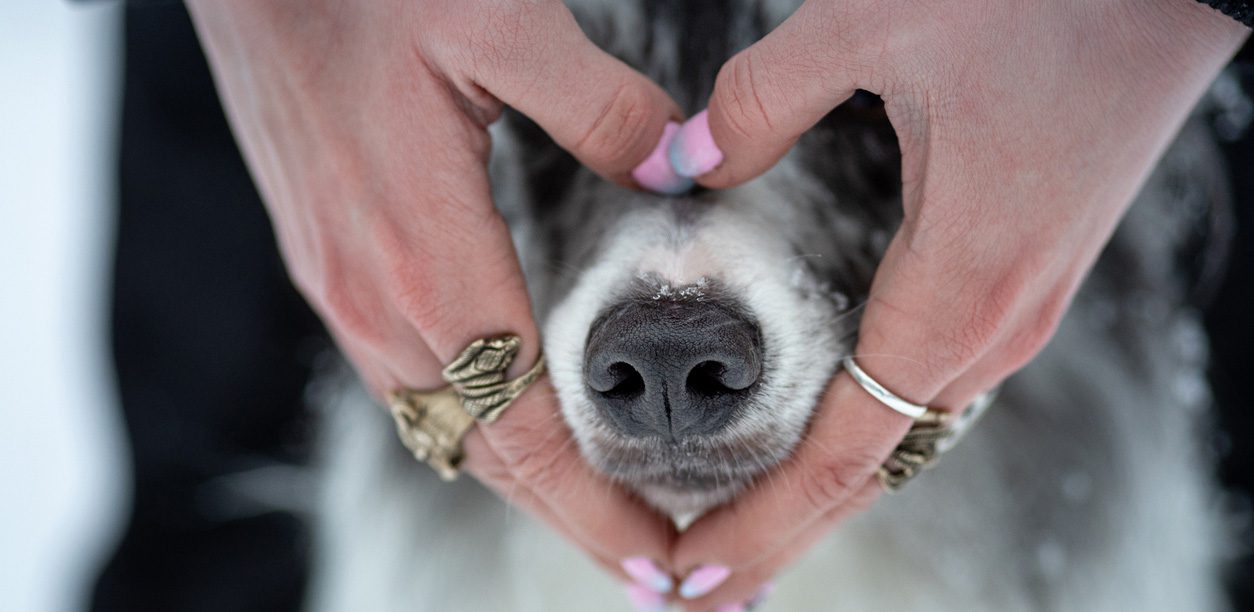
Jul 29, 2026 The Nose Knows: Dogs, Disease, and the Future of Early Detection
In 1989, The Lancet published a letter from two British dermatologists describing an intriguing anecdote of a canine possibly detecting cancer. A British woman noticed that her dog kept sniffing a mole on her leg and seemed unusually focused on that spot. At first, she thought little of it. But the persistent attention from her canine companion eventually prompted her to seek medical advice. The mole turned out to be a malignant melanoma—an aggressive form of skin cancer. What seemed like odd behavior may have helped save her life.
Twelve years later, in 2001, another letter was published in The Lancet describing how a different dog in Florida kept pressing its nose up against its owners’ pants. The owner had struggled to clear up a spot of eczema on his leg that the dog was focusing on. The owner sought medical advice, and it was discovered that the eczema was a basal cell cancer.
Similar stories have circulated for the last forty or fifty years of dogs reportedly alerting their owners to low blood sugar episodes, impending seizures, and other medical conditions before their symptoms became obvious to people or even to healthcare professionals.
These anecdotes supported the development of an ‘alternative’ medical practice known as animal-assisted therapy (AAT). Modern AAT is usually argued to have been started by the American psychologist, Dr. Boris Levinson, who published an article in a 1962 issue of the journal Mental Hygiene, titled “The dog as co-therapist.” However, the sociologist, James Bossard, published a paper in a 1944 issue of Mental Hygiene titled “The Mental Hygiene of owning a dog.” Bossard covered many of the same points that Levinson made 18 years later. Bossard also commented in 1950 (Mental Hygiene 34:345-349) regarding the extraordinary public interest in his paper. He received over a thousand letters asking about the findings in the five years following the article’s publication. By comparison, his next most popular paper (on family table talk) generated only 25 letters from interested individuals.
For many years, the accounts of dogs alerting to diseases were viewed as remarkable anecdotes—interesting, but difficult to explain scientifically. However, a dog behaviorist, Dr. Claire Guest, working at the UK charity, Hearing Dogs for Deaf People, began to take an interest in how dogs might be alerting to cancers in people. A friend of hers at the UK hearing dog charity had an experience in her teens with a pet Dalmatian called Trudie. The dog started obsessively licking a very small mole on her friend’s leg to the point that it became very bothersome. Eventually, she went to her doctor, who removed the mole and said it would be sent for testing, but that it was unlikely to be anything sinister because problematic moles in young people were very rare. However, the laboratory results confirmed that the mole was malignant melanoma, and Trudie’s attention to it was a lifesaver!
Guest then met John Church, an orthopedic surgeon with an unusually broad interest in effective medical therapies. For example, he became interested in using maggots to clean wounds, a common practice several hundred years earlier. During a talk to students, he mentioned the anecdote published in the 1989 issue of The Lancet. After the talk, a student came up to him to tell him about his father in Florida. That led to the 2001 letter to The Lancet, referred to in the 2nd paragraph above, and cemented Church’s interest in dogs’ ability to detect cancer.
Guest began to think more seriously about pursuing a project focused on canine detection of cancer and disease, and interacted with Dr. Michael McCulloch, one of the founders of the Delta Society in the USA (now Pet Partners), who had been using dogs to detect breast cancer in human breath samples. Guest and several colleagues flew out to California to talk to McCulloch, but decided not to use breath samples. Instead, she ended up using urine samples from patients with diagnosed bladder cancer for dog training. Since nobody knew what odors or molecules the dogs were alerting to, training was not going to be easy. One training session resulted in Tangle, one of the dogs in training, alerting to what was reportedly a non-cancer sample. The urologist who had provided that particular sample came to observe how the trial was doing, so Guest was able to ask him about it. The urologist took a note of the sample’s code number, and ten days later he rang Guest. The patient from whom the sample had been obtained had been cleared of bladder cancer, but a more detailed investigation revealed that he had cancer in one of his kidneys. It was at an early stage, and the kidney was safely removed. A few weeks later, a letter arrived addressed to Tangle, thanking him for saving the patient’s life!
In the formal trial, the dogs correctly identified the positive samples 41% of the time, much better than a chance success rate of 14% – one in seven of the samples came from a patient with diagnosed bladder cancer. The paper reporting these results appeared in a 2004 issue of the British Medical Journal. Eventually, Guest, with the support of her family, founded the UK charity Medical Detection Dogs in 2008. The charity now generates over 2 million pounds in annual income.
Since 2008, additional efforts have been launched to understand what dogs might be detecting and how accurate different canine alerts are. Researchers are exploring the possibility that dogs may be sensing changes in the volatile organic compounds emitted by an individual. A dog’s nose contains hundreds of millions of scent receptors, far more than a human’s, allowing it to detect extraordinarily subtle chemical changes. Scientists are beginning to understand how diseases may alter the body’s chemistry, producing distinctive patterns of volatile organic compounds (VOCs) in breath, sweat, urine, and other bodily emissions. To a dog, these changes may create a recognizable scent signature. Guest also describes how dogs are being used to detect a range of other diseases and health conditions. For example, dogs can be trained to detect instances of high and low glucose levels in diabetic children. Such dogs have a considerable positive impact on the lives of families with children with diabetes.
What was once considered a canine curiosity is now attracting serious scientific and commercial attention. Around the world, researchers and entrepreneurs are exploring whether dogs’ remarkable olfactory abilities can help identify disease earlier, more accurately, and in less invasive ways than more traditional screening methods. Two companies at the forefront of this effort—Dognosis in India and SpotitEarly in Israel and the United States—are combining canine scent-detection capabilities with artificial intelligence to develop new approaches to disease screening and detection. Both ventures are based on detecting cancer using human breath samples, which is about as non-invasive as one could get. Published reports on their ventures indicate that they are achieving overall success rates in the 90% range, i.e., low rates of false positives and false negatives, and that they are detecting early-stage cancers when treatment is more likely to produce positive outcomes. Their work raises an intriguing question: could humanity’s oldest animal companion become an important partner in the future of healthcare?
Credit: Anna-av, iStock