


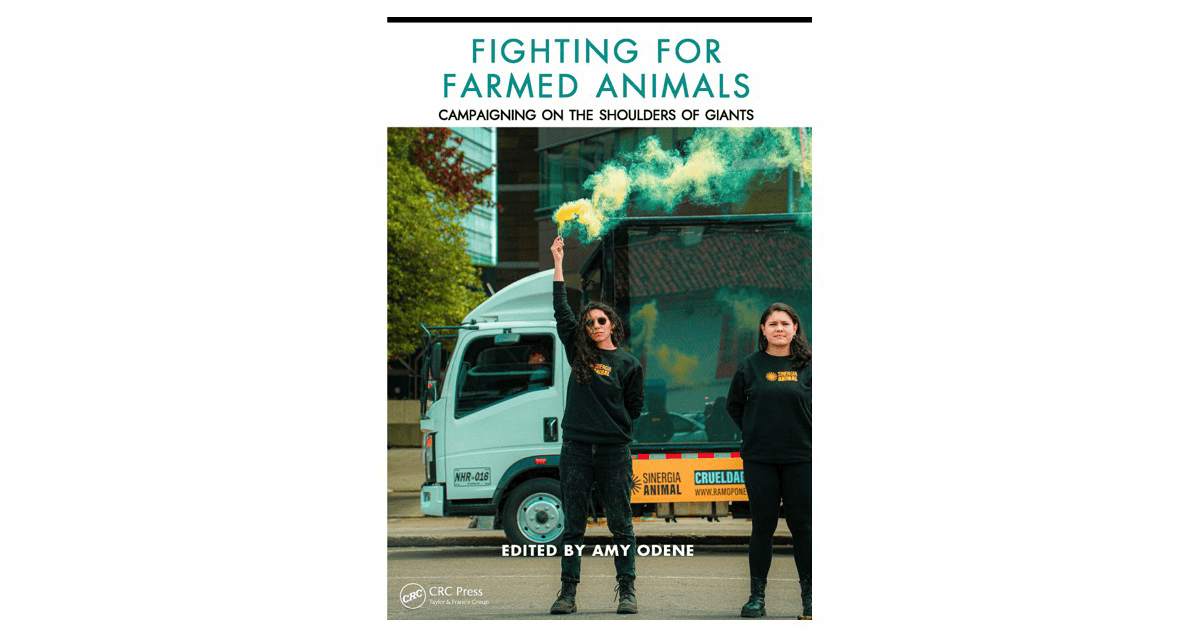
Oct 29, 2026 Book Review: “Fighting for Farmed Animals: Campaigning on the Shoulders of Giants,” edited by Amy Odene
Farmed animal advocacy has advanced substantially since the two giants alluded to in the book’s title first raised the issue. Ruth Harrison drew attention to the welfare of farmed animals in her influential 1964 book, Animal Machines. The book, which includes a foreword by Rachel Carson, author of Silent Spring, has been credited with helping to launch the farmed animal protection movement, much as Carson’s 1962 book helped launch the environmental movement.
Henry Spira, a New York City animal activist, is the second giant. After leading successful campaigns to end certain uses of animals in laboratories, he turned his attention to farmed animal welfare. In the 1990s, he campaigned against the face-branding of dairy cows and then launched initiatives focused on broiler chickens at Perdue and on encouraging McDonald’s to consider animal welfare in its purchasing decisions.
Farmed animal advocacy has come a long way since the campaigns led by Harrison and Spira in the 20th century. Its rapid global expansion in this century has been supported in part by significant new investment from Effective Altruism donors, exemplified by Open Philanthropy, now Coefficient Giving.
The current volume features chapters by 25 successful animal advocates from around the world. Contributors include Carolina Galvani of Sinergia Animal, launched in Brazil but now active globally; Wu Hung of the Environment and Animal Society of Taiwan; Mahi Klosterhalfen of the Albert Schweitzer Foundation in Germany; Josh Balk of the Accountability Board in the United States; Maho Uehara Cavalier of Animal Welfare Corporate Partners in Japan; and Jayasimha Nuggehalli of Global Food Partners in Singapore.
These six individuals exemplify the commitment and perseverance behind the successful campaigns described in the book’s 25 chapters. They also happen to be former colleagues or contacts of mine, offering a personal reminder of how much the movement has grown and how widely its influence now extends.
An underlying theme in many chapters is the perceived difficulty of securing public support and funding for campaigns for farmed animals. Who, it is asked, would be willing to donate to improve the welfare of hens?
It turns out that campaigns against cages and gestation crates have opened the door to both public donations and political support. Opinion polls consistently find that the severe confinement central to modern intensive farming generates an immediate negative response from a majority of consumers. Public concern can then become strong enough to prompt changes in corporate practices and public policy.
Not all the campaigns described in the book focus on confinement or caging. In the Netherlands, Wakker Dier developed a campaign around the idea of “exploding chickens,” vividly describing chickens bred to grow so quickly and become so heavy that their bodies could not cope. In Germany, the Albert Schweitzer Foundation moved beyond its cage-free egg campaign to focus on “beak-searing,” in which the beaks of young chickens are burned with a hot blade to reduce feather-pecking, a behavior exacerbated by close confinement.
A common concern among leaders of the animal protection movement is where the next generation of leaders will be found. This book should help silence such worries. There are many committed young advocates with the perseverance to achieve meaningful change. Academic centers and nongovernmental organizations around the world are also preparing a growing number of graduates and young advocates to become a new generation of leaders, following in the footsteps of Ruth Harrison and Henry Spira.
For both established and emerging advocates, Fighting for Farmed Animals offers an instructive and encouraging account of how determined individuals, practical strategies, and sustained campaigns can improve the lives of farmed animals.