


Nov 12, 2026 Rabies at Sea: South Africa’s Unprecedented Seal Outbreak
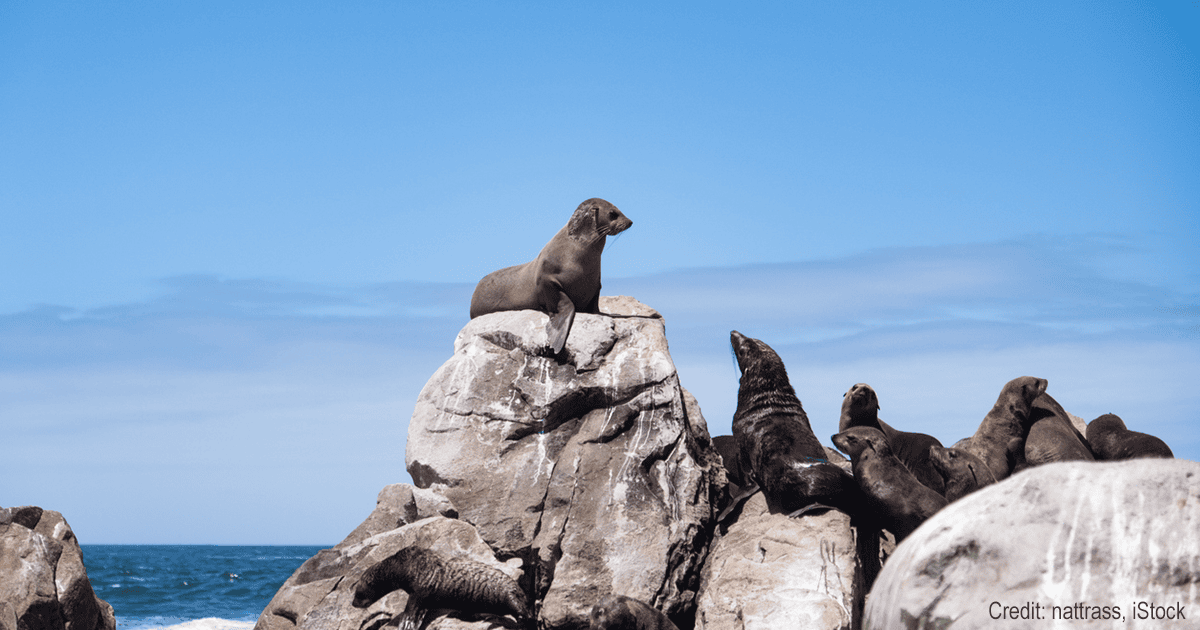
Something alarming began happening along the coast near Cape Town. Cape fur seals, a familiar presence on beaches and around harbors, were behaving in unusual and sometimes dangerous ways.
Seals charged at people and dogs. Surfers, swimmers, and other beachgoers reported bites. Some animals appeared reluctant to return to the water, while others attacked surfboards, kayaks, and other objects.
At first, the cause was unclear. Then, in 2024, testing revealed an extraordinary explanation: rabies.
An Outbreak Unlike Any Other
Rabies had occasionally been detected in individual marine mammals, but it had never been known to spread and become established within a free-ranging marine mammal population.
That changed with the Cape fur seals of southern Africa.
More than 100 cases have now been confirmed in South Africa and Namibia. Retrospective testing indicates that the virus was circulating in the seal population by at least August 2022, nearly two years before the outbreak was officially recognized.
The World Organization for Animal Health describes the sustained transmission of rabies among Cape fur seals as an unprecedented development in the ecology of the disease.
The outbreak also presents a direct risk to people. By May 2026, authorities had recorded more than 145 incidents of human exposure to seals. Rabies is nearly always fatal after symptoms appear, but prompt post-exposure treatment can prevent the disease in someone who has been bitten, scratched, or otherwise exposed to an infected animal.
How Did Rabies Reach the Seals?
Scientists investigating the outbreak have traced the virus to a dog-related rabies variant maintained by black-backed jackals in southern Africa. Current evidence suggests that a jackal transmitted the virus to a Cape fur seal, probably in a single spillover event. The virus then began spreading from seal to seal.
Cape fur seals may be particularly vulnerable to this type of transmission because they are highly social. They gather closely together in large coastal colonies, creating repeated opportunities for an infected animal to bite or otherwise expose other seals.
Their mobility adds another complication. Cape fur seals range along the coasts of South Africa, Namibia, and southern Angola and can travel hundreds of miles. In June 2025, Namibia confirmed its first case, demonstrating that the outbreak had already crossed an international border.
A related discovery showed that transmission can also move in the other direction, from the ocean back to land. In 2024, a domestic dog in Cape Town developed rabies after apparently being bitten by a seal during an off-leash beach walk. Genetic analysis linked the dog’s infection to the virus circulating among the seals.
Could the Virus Spread Farther?
So far, rabies associated with this outbreak has not been detected in any other marine mammal species. Even so, Cape fur seals sometimes come into contact with other seals and marine mammals, including animals that travel to sub-Antarctic islands.
That possibility has raised concerns that the virus could eventually spread to other marine species or reach regions currently free of rabies. Scientists emphasize, however, that this is a risk under investigation, not evidence that such spread has already occurred.
There is also reassuring news. Despite numerous reported exposures, no human case of rabies acquired from a Cape fur seal has been confirmed.
That does not mean a seal bite can be safely dismissed. South Africa’s National Institute for Communicable Diseases advises people to keep their distance from seals and to seek urgent medical care after any bite or scratch. The wound should be washed immediately and thoroughly with soap and running water. A healthcare professional can then assess whether rabies post-exposure treatment, a tetanus booster, or other care is needed.
The institute also recommends keeping dogs away from seals and ensuring that a pet’s rabies vaccination is up to date.
A One Health Warning
The Cape fur seal outbreak shows how a virus can move from land to sea, establish itself in a new host species, and pose risks to wildlife, domestic animals, and people.
It is a powerful example of the One Health principle: human, animal, and environmental health are interconnected.
What began with reports of unusually aggressive seals has become an unprecedented wildlife disease event. Scientists are continuing to monitor its spread, investigate its ecological effects, and watch for signs that the virus could move into other marine mammals.
For the people and animals sharing southern Africa’s coastline, the outbreak underscores the importance of vigilance, vaccination, and keeping a safe distance from wildlife.