


May 29, 2025 The Jingles Awards: The Power of Anecdotes
Around 1990, the Delta Society (now Pet Partners – an organization supporting animal-assisted activities and therapy) held its annual meeting in New Jersey. During one of the lunchtime sessions, five Jingles Awards were issued to five human-animal teams representing different areas of human-animal cooperation. The awards were named after Dr Boris Levinson’s dog, Jingles, who had become a “co-therapist” in Levinson’s psychological counseling sessions. Levinson, who is commonly credited for introducing (or reintroducing) animal-assisted therapy, had discovered that the presence of Jingles in the room with a patient (usually a child) facilitated his ability to connect with the patient and produce therapeutic outcomes. Several decades later, a Delta Society supporter, Hollywood professional Bill Balaban, urged the organization to establish the Jingles Award to recognize exceptional human-animal bonding experiences. These awards lasted briefly, but it could be argued they reached their peak at that Delta Society conference in the early 1990s.
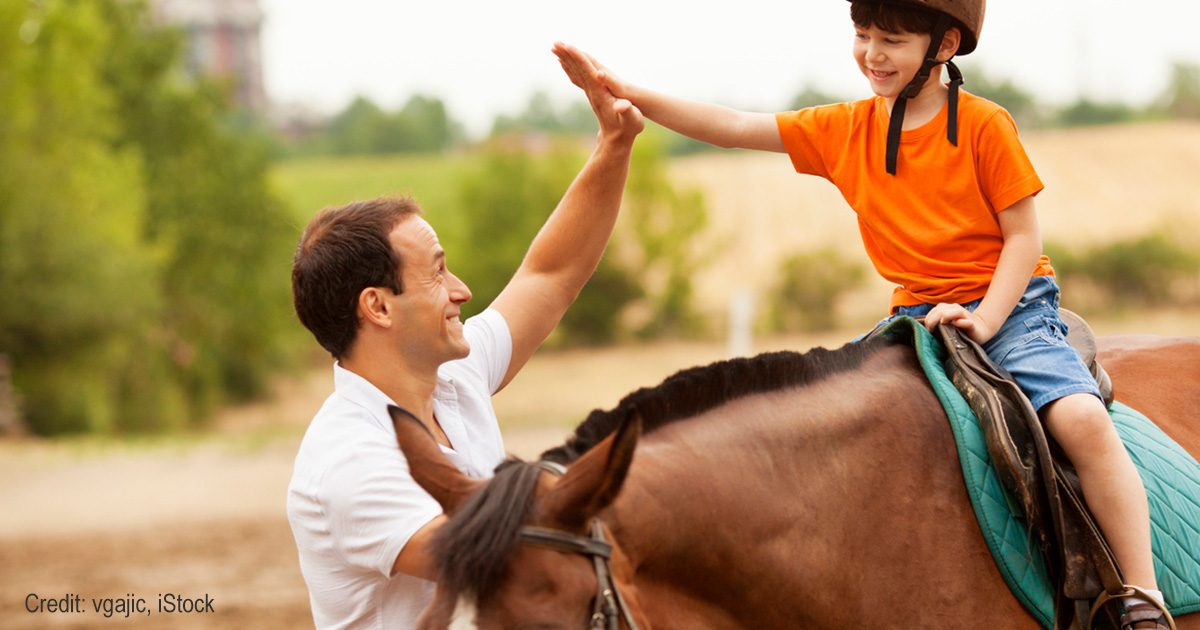
Five different human-animal teams were recognized during the lunchtime ceremony in the hotel ballroom. First came Lemonade, a horse involved in equine-assisted therapy (hippotherapy) with children. Lemonade was understandably not present in the room. Still, the human partner commented on how Lemonade had the knack of moving in a way that prevented her human charges, usually children who might benefit from hippotherapy, from falling off her back. Lemonade anticipated her rider’s balance problems, and her adjustments helped the rider stay aboard!
The next award went to a human-dog team visiting institutions to bring canine comfort to residents of hospitals and nursing homes. The human partner commented on how her dog became very excited whenever the bandanna (the signal that they were about to visit a facility to meet new people) was brought out and tied around the dog’s neck. While in the facility, the dog was always very gentle when interacting with the residents. The human partner thanked the Delta Society for the award and commented that the visits were coming to an end because her dog had contracted an incurable cancer!
The third award went to a sight-impaired individual and her seeing-eye dog in New York City. The human partner had been able to go out onto the streets of Manhattan with her cane, but the dog gave her so much more confidence. The dog would stop in front of her at intersections and prevent her from crossing until the walk signal came on and it was safe to cross the road.
The next award went to a hearing ear dog (Rerun) and his human partner, a deaf dairyman from the Mid-Atlantic region. Rerun had learned to serve as the dairyman’s ears and would alert him when the automatic milking machines began to run dry and suck air rather than milk. The dairyman, choking back tears towards the end of his presentation, commented on how liberating it was to have a partner who could reliably function as his ears in the milking parlor.
Finally, a Midwest professor in a wheelchair recounted his story of the impact of having a service dog. He coached a championship-caliber swim team with disabilities at his college. He was an outgoing, social character, but all that changed one evening when he was out on the town and was set upon by several thugs who tipped him out of his wheelchair and left him with additional injuries. The event traumatized him, and he stopped leaving his house. He was offered a service dog, which he tentatively accepted. The dog greatly impacted his confidence, and he resumed his former active social life.
By the end of the Awards presentations, there was hardly a dry eye in the ballroom. I asked if the presentations had been videotaped (they had not). Still, I believe that a videotape of those five human-animal teams would have had a considerable long-term impact (the ceremony certainly had a long-term effect on me).
A respected colleague, Dr. Harold Herzog, author of “Some We Love, Some We Hate, and Some We Eat” and of several blogs on the lack of rigorous academic support for the claim that human-animal interactions have positive impacts on human health calls attention to the challenges of demonstrating the positive effects of animals on human lives. And yet, most pet owners have no trouble accepting that animals provide benefits that support mental and physical health. We are left wondering why it has proved so challenging to demonstrate the positive benefits of animal companions.
One answer to this conundrum is that there has been very little research funding to support large-scale investigations into the impact of companion animals on human health. Another response to the conundrum is that the positive effects of animals are subtle and complex, and it is challenging to document conclusively in studies involving small sample sizes. However, even studies involving large numbers of subjects have failed to find clear human health benefits associated with the presence of companion animals, such as the studies referenced by Herzog in this blog. However, Herzog also noted that he is a lifelong pet owner. His critique of the claims of a “pet effect” on human health does not influence his pleasure (and health benefits?) from sharing his home with companion animals.
I have long felt that the human-animal bond field needs many more disciplined and published anecdotes of how pets affect our lives. As founding editor of the journal Anthrozoos, I often urged individuals with fascinating stories of how pets have positively affected their lives or the lives of others to submit short or long case studies exploring such impact. In my ten years as editor of Anthrozoos, I never received one case study.
Many years later, I was fortunate to become acquainted with Yale psychology Professor Alan Kazdin (now Emeritus). Kazdin confirmed that anecdotal findings can be beneficial to provide important indications of a pet effect. With sufficient anecdotes, one might even end up with anecdata!