


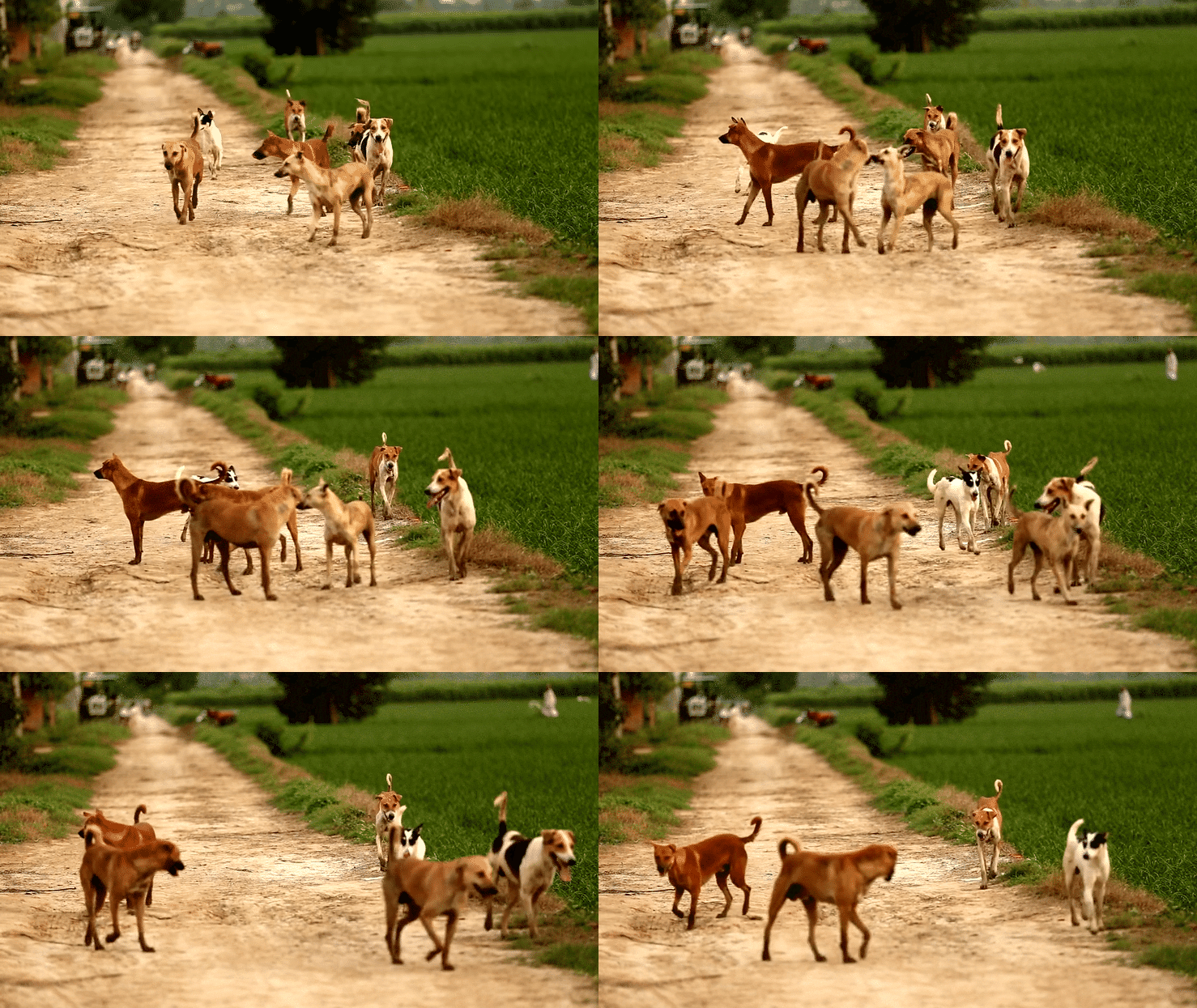
Feb 05, 2026 The Indian Supreme Court Acts on the Stray Dog Issue: Is it a Crisis or an Opportunity? Part 2
Part 1 of this story discussed the recent actions of the Indian Supreme Court following the death of a young girl from rabies after a dog bite. The justices raised important questions about finding the right balance between human and animal welfare; however, they seemingly overlooked findings on rabies incidence in India in the 21st century. It is worth noting that the justices had received an earlier 2022 report from Justice S. Siri Jagan, which addressed the stray dog issue in Kerala and the ineffective implementation of the Animal Birth Control (ABC) program in the state. Meanwhile, journalists in India who have covered dog-related topics and rabies have generally reinforced sensational claims about the threat posed by the country’s street dogs.
In 2003, the World Health Organization, concerned about the number of rabies-related deaths in Asia, sponsored a nationwide survey in India to assess the burden of human rabies in the country. This survey, conducted from February to August 2003, was led by Dr. M. K. Sudarshan and his colleagues from the Association for the Prevention and Control of Rabies in India (APCRI). Established in 1998, APCRI coordinates efforts to eliminate rabies in India. The Pan American Health Organization had provided a successful model for achieving such a goal, as confirmed cases of canine rabies in Latin America and the Caribbean dropped from 25,000 in 1980 to fewer than 300 in 2010.
The 2003 survey in India estimated that there were 17 million dog bites annually, translating to approximately 15 per 100,000 people. These dog bites were responsible for an estimated 17,000 to 20,000 human deaths from rabies. At that time, India accounted for about one-third of the global rabies burden, with over 95% of human rabies cases occurring after a dog bite incident.
In 2025, a follow-up survey on rabies incidence in India was published in The Lancet Infectious Diseases. The study surveyed 78,807 households nationwide from March 2022 through August 2023. It estimated the annual rate of dog bites at 5.6 per 100,000 people, resulting in 9.1 million bites, and reported 5,726 annual human deaths from rabies. This indicates that the incidence of dog bites in India has decreased by two-thirds over the twenty years from 2003 to 2023, while human rabies deaths in the country have declined by approximately 75%.
In contrast, recent reports in Indian media claim that both dog bite incidents and human rabies deaths are on the rise. The surveys conducted in 2003 and 2023 were meticulously carried out by professionals. The findings from these two surveys lead to the question: Why have the rates of dog bites and the incidence of human rabies fallen so dramatically? Fortunately, other projects and reports offer insights into the improvements in the human rabies situation.
The non-profit organization Help in Suffering (HIS) in Jaipur has published several reports linking the sterilization of street dogs to a decrease in dog bites and human rabies cases. The HIS dog sterilization project began in the mid-1990s, inspired by a WHO guidance document on street dog management.
In the first study, HIS veterinarians compared the impact of dog sterilization and rabies vaccination in an area where HIS was actively catching, vaccinating, and sterilizing street dogs before returning them to their original locations (following India’s ABC model) with an area where no such interventions were performed, i.e., the “control” area. The results showed that human rabies cases decreased from an annual rate of eight to zero in the area where the ABC project was implemented, but rabies cases remained unchanged in the city’s control area.
In a follow-up dog-bite study, the veterinarians reported that dog bite rates fell by two-thirds, from 700 to 200 per 100,000 people, in the area where the ABC project was being conducted.
Although there were no reported human rabies deaths in the ABC area of Jaipur, the actual decrease was small, dropping from eight cases a year to zero. A similar initiative in Chennai, which began in 1998 when the municipality stopped its dog culling activities and instead focused on implementing an ABC program, saw a significant decline in annual human rabies cases, from 120 to zero.
In Jaipur, Help in Suffering has been tracking the number of street dogs along designated “index routes” throughout the city. Despite quickly achieving a 70% sterilization rate for female dogs, the overall street dog population decreased only gradually. It took approximately 20 years for the street dog population to decline by 50%.
It is possible—and even likely—that the decrease in the national dog bite rate, along with a 75% reduction in human deaths from rabies in India, is largely due to the expanding implementation of ABC programs nationwide. For instance, the states of Goa, Sikkim, and Uttarakhand have adopted ABC in the past five to ten years. Additionally, the British charity, Mission Rabies and the global charity, Humane World for Animals (formerly Humane Society International) have been conducting dog vaccination drives in India.
In Jamshedpur, the Tata Trusts funded an ABC program that reduced citizen complaints about street dogs and contributed to healthier dog populations. A recent survey of street dogs in Mumbai revealed that 70% were sterilized, likely due to the efforts of local NGOs, even though there was no formal street dog sterilization program initiated by the Mumbai municipality.
Similarly, a survey in Bengaluru (Bangalore) found a high sterilization rate among the estimated 300,000 street dogs in the city, with local animal non-government organizations (NGO) sterilizing around 40,000 dogs annually. In Gujarat, the municipalities of Ahmedabad, Rajkot, and Jamnagar are all supporting ABC projects, and the state intensified its ABC efforts in 2023 following an update to the ABC Dog Rules that year.
In May 2025, Lucknow, Uttar Pradesh, launched its own ABC program and has reported considerable success as a result.
WBI is surprised that so little attention has been given to recent academic reports on street dogs, dog bites, and human rabies cases. WBI anticipates that state and municipal initiatives in India, partly driven by the Supreme Court’s vigorous focus on managing street dogs, will continue to support ABC projects. As a result, changes in urban dog management are expected to further reduce human rabies deaths in the country.
It’s important to note that even well-implemented ABC projects do not lead to an immediate decline in street dog populations. Research suggests it can take 3 to 5 years for an effective ABC program to result in a noticeable decrease in street dog numbers. Additionally, the rapid increase in pet dog ownership in India over the past twenty years may contribute to a rise in street dog populations, as “oops” litters from unsterilized pet dogs end up on city streets. Private veterinary clinics can play a crucial role in addressing this issue by encouraging pet owners to sterilize their new dogs.
India still has a long way to go in managing street dogs effectively and humanely. However, several reports highlight the positive impacts of systematic and efficient dog rabies vaccination and Animal Birth Control (ABC) programs. Eliminating dog bites is a more challenging goal. In the USA, the annual dog bite rate averages around 100 per 100,000 people, even though approximately 70% of pet dogs are sterilized. There are areas of the world where the annual dog bite rates are as low as 40 per 100,000 people, but none where dog bites have been completely eliminated. In Indian urban areas, the annual dog bite rate ranges from around 200 to as high as 1,200 per 100,000 people, indicating significant room for improvement in human-dog relations.
Video credit: rvimages, iStock