


Oct 30, 2025 South Florida Wildlife Center – Moving On
Introduction
For over five decades, the South Florida Wildlife Center (SFWC) has been a cornerstone of wildlife rescue and rehabilitation on 4.1 acres of leased land in Broward County, South Florida. The SFWC serves not only Broward County but also parts of Palm Beach and Miami-Dade counties. The SFWC is the busiest wildlife rehabilitation facility in the state of Florida. Each year, SFWC cares for an average of 8,000 patients from over 200 species, providing critical rescue, rehabilitation, and release services. Its Resource Center, supported by a highly qualified staff, expedites hospital admissions and annually provides over 100,000 community members with information on reuniting young wildlife with their mothers and caring for injured animals. It also educates the public about the importance of protecting Florida’s wildlife.
 Changes
With an increasing human population and infrastructure construction reducing local wildlife habitat, the land on which the SFWC sits has become more valuable and expensive. Additionally, local authorities would like to expand the Fort Lauderdale-Hollywood International Airport, which is situated adjacent to the SFWC. These and other factors all contribute to SFWC’s decision that a move was necessary to ensure the continuity and growth of their services. The search for a more permanent and suitable location that meets SFWC’s needs has been long and arduous.
Moving On
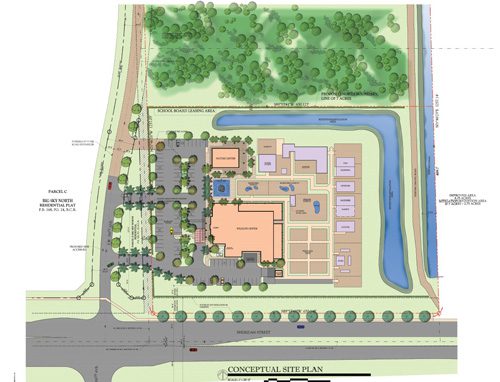
However, in August 2025, the Broward County School Board approved a 50-year ground lease agreement with SFWC for an 8.25-acre parcel in Southwest Ranches that borders undeveloped Everglades habitat and is approximately 20 miles from the current facility. The School Board’s decision, supported by the Town of Southwest Ranches, provides a location for a state-of-the-art wildlife hospital and rehabilitation center to be built. Construction is slated to begin in 2026, with the new facility expected to be operational by 2029.
Relocating The Wildlife
The relocation will involve transferring all the wildlife patients receiving treatment, as well as animals being raised or finishing their rehabilitation before being released back into the wild. Every move will be closely coordinated and supervised by veterinary and animal care staff to ensure appropriate continuity of care and to minimize animal stress, ensuring a smooth and safe transition for all animals.
SFWC is also home to 16 permanent educational residents—animals that cannot survive in the wild due to injury or other factors. These residents will be moved to new, specially designed enclosures at the Southwest Ranches facility, where they will live safely and comfortably.
Successes and Challenges
The move to Southwest Ranches will be a genuine community effort, relying on the generous support of individuals, businesses, and local partners. To bring this vision to life, SFWC will need to raise $10 million to construct the state-of-the-art facility that will meet the growing needs of our wildlife patients and programs.
The new center will feature expanded rehabilitation areas, advanced medical suites, and enhanced public education spaces. These improvements will allow us to care for more animals, provide critical treatment for those in distress, and continue to educate the public about the importance of protecting Florida’s wildlife and natural habitats.
 By supporting this move, the community will play a direct role in shaping the future of wildlife care in South Florida. Every donation will help ensure that injured, orphaned, and permanently non-releasable animals receive the best possible care, and that future generations can learn from and connect with the wildlife around them. Together, we can create a facility that will serve as a rescue, rehabilitation, and education hub for decades.
Looking Ahead
The relocation to Southwest Ranches represents an exciting new chapter. This move will allow the organization to expand its capacity, provide enhanced medical and rehabilitation care, and offer improved educational opportunities for the community. The support of local residents, businesses, volunteers, and donors will be instrumental in making this vision a reality, including the $10 million needed to build a state-of-the-art facility.
With the community’s help, SFWC will continue to serve as a vital resource for wildlife in South Florida. It will ensure that injured, orphaned, and permanently non-releasable animals receive the care they need and inspire future generations to become advocates for wildlife conservation. This relocation is more than a move—it is an investment in the long-term health of Florida’s wildlife and the people who care for them.
____________________________________
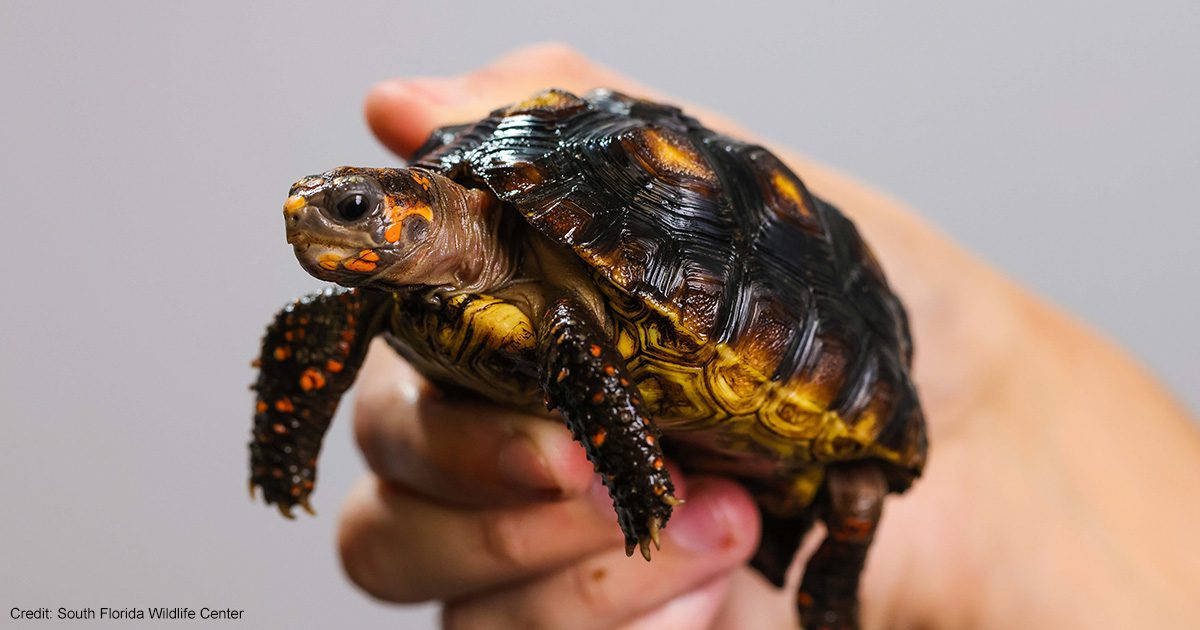
Poppy, shown in the lead image, is a Red-footed Tortoise and a permanent member of the SFWC family. She serves as an animal ambassador, helping teach the public about responsible pet ownership and the dangers of releasing non-native wildlife into the wild. Poppy arrived at SFWC in September 2023 and was left in the night cages (designed for safely housing patients outside business hours). She was only a few days old, still bearing her umbilicus. The rescuer had mistaken her for an orphaned baby Gopher Tortoise. It is believed that Poppy hatched from eggs laid by a pet Red-footed Tortoise that had escaped. Once hatched, these reptiles possess instincts that enable them to immediately explore and begin their journeys. Had she been a Gopher Tortoise, she would have been returned to the wild immediately, as reptiles do not provide parental care in the same way birds and mammals do. However, since Poppy is native to the forests of South America, she was deemed an excellent ambassador for her species and for broader wildlife conservation efforts in South Florida. Through her, SFWC can also advocate for Florida’s only tortoise, the Gopher Tortoise, which is threatened due to habitat loss. Today, Poppy is a beloved favorite among staff and classrooms alike.