



Sep 01, 2026 Book Review: How a New Wave of Books Is Rewriting the Beaver’s Reputation
For most of the last four centuries, the beaver’s relationship with North America was transactional. Europeans wanted its fur to make hats. Farmers wanted the dams gone from their fields. Homeowners wanted its flooding to stop. In each case, the animal was assessed by what it cost or produced for humans, not by what it was or what it meant to the land it inhabited.
Several recent books, summarizing ecological research, are quietly overturning those views, as public conversation about beavers is shifting from pest control toward something closer to reverence.
Popular books include Ben Goldfarb’s Eager: The Surprising, Secret Life of Beavers and Why They Matter (2018), Leila Philip’s Beaverland: How One Weird Rodent Made America (2022), and John Aberth’s Bringing Up Beaver: Two Orphaned Beaver Kids, the Humans, and Our Journey Back to the Wild (2025). Read together, they trace an arc: from the animal as an economic commodity, to the animal as an ecological engineer, to the animal as an individual with a family, a personality, and a claim on our moral attention.
Misunderstanding Beavers
 Start with the beaver itself, because its strangeness explains much of why people have struggled to see it clearly. Philip opens Beaverland by cataloging the creature’s contradictions. Beavers dive and swim with the fluid grace of a seal, yet their forepaws are startlingly humanlike, with five dexterous fingers and bare palms capable of fine manipulation. Their fur is groomed with a cat’s fastidiousness, but their hind feet are broad and webbed like a goose’s, and their tail, flattened and scaled, looks almost prehistoric. Philip calls them “part bear, part bird, part monkey, part lizard.”
Many people believe beavers eat fish; in fact, they are strict herbivores, subsisting on bark, cambium, leaves, and aquatic plants. Many confuse the lodge, where beavers actually live, with the dam, a separate structure built to raise water levels around it. Many assume beaver populations are dangerously large, when the opposite is true: an estimated 200 million beavers once inhabited North America before the fur trade, while the current population is a small fraction (5%) of that. And many conflate the industrious, dam-building, native beaver with nutria. This invasive South American rodent causes real ecological damage but bears no relation to Castor canadensis beyond superficial resemblance.
Some of the oldest myths are almost too strange to be believed. Medieval European bestiaries, a copy of which is held in the Bodleian Library at Oxford, depicted beavers as wolflike creatures with serpentine necks and removable testicles that the animal would supposedly fling at hunters to distract them from the chase, thereby sacrificing its own anatomy to save its life. The story was invented to explain why beavers were hunted so intensively for castoreum, a secretion used in perfume and medicine. Yet it produced a durable piece of folklore with no basis in biology. The Catholic Church, for its part, once classified the beaver as fish rather than meat, permitting its consumption on holy days of abstinence. This ruling turned the animal’s flesh into both a devotional loophole and a coveted delicacy for wealthy Catholics.
The Fur Trade as Ecological Catastrophe
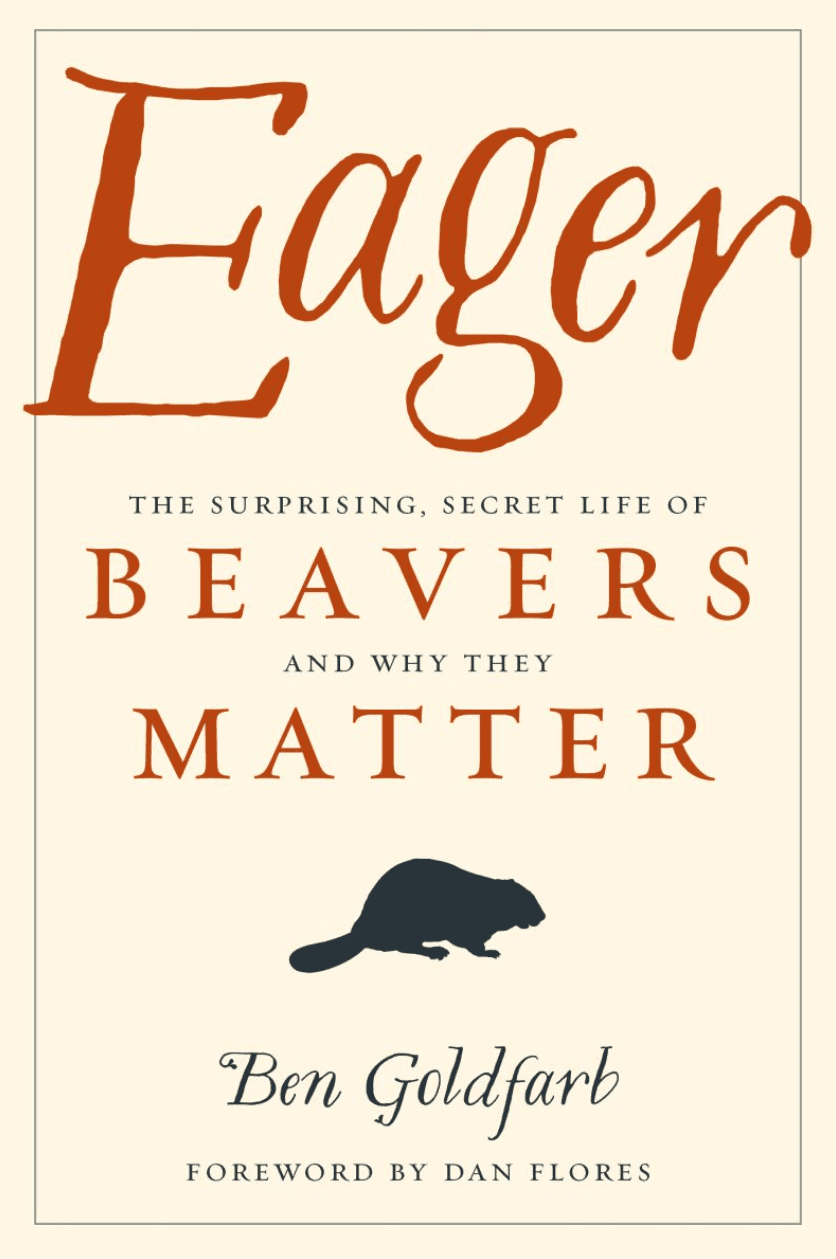 Goldfarb’s book, Eager, the most influential of the recent beaver books, makes the case that the fur trade was not simply a chapter in commercial history but one of the largest unrecognized ecological disasters in North American history. He estimates pre-contact beaver populations at between 60 million and 400 million animals. By the height of the fur trade, that population had been reduced to perhaps one hundred thousand. Goldfarb quotes researchers Sharon Brown and Suzanne Fouty, who called this the first large-scale Euro-American alteration of watersheds, occurring centuries before anyone built the Glen Canyon Dam or worried about the Cuyahoga River catching fire.
Beaver dams slow the flow of water, causing it to spread laterally across a floodplain rather than cutting a single deep channel. That spreading creates wetlands, recharges groundwater, and traps sediment and nutrients that would otherwise wash downstream. Remove the beavers, and the process runs in reverse: streams incise into narrow, fast channels, wetlands dry into meadow and then into ordinary dry land, and the water table drops. Goldfarb argues that most Americans today, when they picture a healthy natural stream, are actually picturing this degraded, post-beaver landscape, a clear, narrow, rocky trickle, rather than the sluggish, dam-choked marsh that would have been ecologically normal before European contact. He borrows the concept of shifting baseline syndrome to describe how each generation accepts the landscape it inherits as the standard of health, forgetting that the previous generation’s landscape was itself already diminished. A century of biologists fell into this trap, mistakenly assuming beavers had only ever lived in isolated pockets of California and had never occupied high-altitude terrain. This error delayed reintroduction efforts for decades.
Wetlands make up roughly two percent of total land area in the intermountain West, according to research Goldfarb cites, but they support around eighty percent of the region’s biodiversity. An animal that creates wetlands at no cost, using only its own instinct to make water wherever it senses movement, does work that would otherwise require enormous capital investment. Emily Fairfax, the ecohydrologist who consulted on beaver accuracy in the recent Pixar film, Hoppers, put it succinctly in a recent interview: even with an excavator and a blueprint copied from a beaver dam, a human engineer could not replicate what the animal builds. Her research has also shown that beaver-maintained riparian corridors stay green and moist during wildfires, functioning as natural firebreaks.
From Villain to Restoration Partner: Goldfarb profiles a loose, informal network he calls the “Beaver Believers,” a coalition of scientists, ranchers, and private citizens who have concluded that landscapes with beavers are healthier for both humans and wildlife than landscapes without them. Kent Woodruff, a U.S. Forest Service ranger who founded the Methow Beaver Project in Washington State, pioneered a method of capturing beavers that cause property conflicts elsewhere and relocating them to degraded stream reaches, where they perform restoration work that would otherwise cost far more to accomplish through human engineering. Jay Wilde, an Idaho rancher, reintroduced beavers to his own parched land and watched springs and wet meadows return within a few years, evidence that ranchers, historically among the beavers’ fiercest opponents, can become some of their strongest advocates once they see the benefits firsthand.
Goldfarb challenges the popular story about Yellowstone National Park. In Yellowstone, a widely circulated video narrated by George Monbiot popularized the idea that reintroducing wolves transformed the park’s rivers by changing elk grazing behavior, a phenomenon dubbed a trophic cascade. Goldfarb is skeptical of the sweeping version of that story. He argues that wolves may have allowed willows to regrow by pressuring elk away from riverbanks. Still, it was the beavers who returned to eat those willows and rebuild the dams, thereby reshaping the hydrology. While wolves are the popular ecological hero, the beavers actually move the dirt, a useful corrective for an audience prone to romanticizing charismatic predators while overlooking smaller, quieter species.
Not every institution has caught up to this science. Goldfarb documents resistance to beaver-assisted restoration in California’s Scott Valley that came not primarily from ranchers, as one might expect, but from the state’s own Department of Fish and Wildlife, which limited the placement of beaver dam analogs and, during severe droughts, sought to remove beavers over fish-passage concerns. Heidi Perryman’s nonprofit, Worth a Dam, became a prominent advocacy voice after beavers colonized a creek in Martinez, California, in 2007, and local authorities initially moved to remove them before public pressure changed the calculus. Institutional habits of thought change more slowly than science does, even when the evidence is well established.
A Naturalist’s Reckoning With Complicity
While Goldfarb writes primarily as a journalist, synthesizing research and advocacy, Philip’s Beaverland is more of a memoir woven through natural history and is more willing to sit with discomfort. The book begins with her own fascination, watching beavers maintain a pond near her home in Woodstock, Connecticut, but her most compelling guides turn out to be people who challenge her instincts rather than confirm them. Herb Sobanski, a trapper who obtains many of his pelts by removing so-called nuisance beavers from the properties of annoyed Connecticut homeowners, becomes one of her central mentors, and Philip portrays him with genuine nuance and empathy rather than condemnation. She accompanies him into the swamp, wading through freezing water in rubber hip waders, watching him set traps with the same care and attentiveness a naturalist might bring to observation. It is an uncomfortable pairing for a reader inclined to see trappers and beaver advocates as natural opponents, and Philip does not resolve that discomfort so much as ask the reader to hold it.
That willingness to complicate the narrative extends to her treatment of history. She recounts how many Indigenous nations across the continent participated extensively in the fur trade, exchanging pelts for iron kettles, blankets, and other European goods, even as their own cultural traditions maintained strong taboos against overhunting beavers, whom they viewed as belonging to an animal nation deserving of respect after death. The book’s most affecting figure may be Dorothy Richards, known locally as the “beaver lady,” who lived for years with as many as fourteen beavers in her farmhouse in the Adirondack foothills. The animals, with names like Delilah and Hunk, wandered freely through her rooms, stole kindling from the fireplace to wedge between chair legs, and dragged an oriental rug across the floor toward an indoor pool built for their benefit. Richards’s memoir, and the grainy photograph of her seated in an armchair holding an enormous, visibly content beaver, capture something the ecological literature alone cannot: the sense that these are individual animals with distinct temperaments, capable of forming bonds with humans that resemble, in some ways, the bonds we form with dogs.
Raising a Beaver, Rethinking a Family
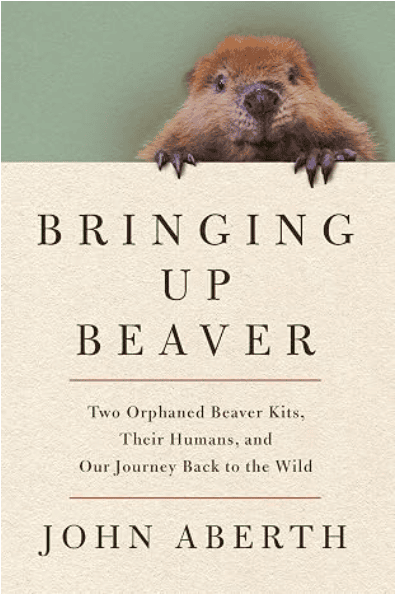 If Goldfarb makes the systemic case and Philip makes the historical and personal case, John Aberth’s Bringing Up Beaver makes the case at the scale of a single animal’s life, and it may do the most to shift how a general audience feels about beavers rather than merely what they know about them. The account grew out of a wildlife rehabilitation call during pandemic lockdown: a local farmer had used a backhoe to destroy a beaver dam and then crushed the family’s lodge, both illegal acts, orphaning two beaver kits that Aberth then spent two years raising.
Aberth’s framing of the beaver’s social position is stark. He writes that if wildlife in general constitutes a persecuted minority of the animal world, one to which almost no cruelty laws meaningfully apply, then beavers are the persecuted minority among wild animals, lumped taxonomically with rats and dismissed by most people as a nuisance despite being, in his words, critically important to local ecology. He compares the biological diversity supported by beaver-created wetlands to that of rainforests and coral reefs. This analogy recurs throughout recent literature and signals how thoroughly the scientific consensus has shifted, even as public perception lags.
Aberth’s main contribution is in beaver behavior. He describes beaver kits as intensely social animals that need companionship to develop normally, animals that mate for life and form close bonds within their family or colony. He recounts how the kit he calls BK, short for beaver kit and also for the syringe milk that sustained him, would stand upright on his hind feet and listen intently at the border between lawn and forest, as though straining to detect some signal from the wild world he had not yet rejoined. A small stream near Aberth’s house produced a constant murmur he describes as a kind of siren song for BK, pulling at an instinct the kit had never had the chance to develop through experience. It is a small, quiet detail, but it does more to establish beaver interiority than any statistic about wetland biodiversity could.
Culture Catches Up
Pixar’s animated blockbuster film, Hoppers, released in 2026, centers on a young woman who inhabits a robotic beaver body to study a colony from the inside, more science fiction than documentary, but one that the studio apparently felt obligated to ground in real research. Scientific American sent a reporter to interview Emily Fairfax, the University of Minnesota ecohydrologist who consulted on the film, and the resulting interview doubles as a primer on beaver biology aimed at a mass audience. Fairfax confirmed that beaver family units are essential to their engineering work, that disrupting a family is one of the most damaging things a person can do to a colony, and that a full-grown beaver, weighing between forty and one hundred ten pounds, would make an exceptionally poor classroom pet, prone to reducing furniture to dam material within a single school day. Hoppers helps show the world from a beaver’s perspective while also serving as entertainment for children.
A New Appreciation
The newer literature asks readers to measure the beaver’s value instead by what it contributes when left alone to do what it has always done, and by what it experiences as an individual animal capable of attachment and instinct that persists even when separated from the wild world that would ordinarily shape it.
Conflicts with beavers will continue, as flooded roads, blocked culverts, and gnawed orchard trees create costs to growing human populations. What these books argue, collectively, is that those costs are manageable through low-tech, non-lethal tools such as flow devices, pond levelers, and exclusion fencing, and that the ecological benefits beavers provide, in flood mitigation, drought resilience, wildfire buffering, and biodiversity support, dwarf the occasional inconvenience. For an audience already inclined to take animals’ interests seriously, the message emerging from this literature is not sentimental. It is an accurate accounting of what beavers do, ecologically and individually; it changes the calculation of what we owe them, and it supports the conclusion that the change is overdue.
Video credit: saravuth-photohut, iStock