


Oct 30, 2025 The Zoology Of Children’s Literature (2025 Update)
For more than 200 years, children throughout the world have learned moral lessons from stories heavily populated by both verbal and nonverbal animal characters. Whether we are talking about Peter Rabbit and Jemima Puddleduck from Beatrix Potter, Babar the Elephant from Jean de Brunhoff, Winnie-the-Pooh and his friends from A.A. Milne, or the wild animals of African folk tales, these characters have enthralled and educated children worldwide.
Nevertheless, when the first volume of Anthrozoos was launched in 1987 (the first scholarly journal to publish material on human-animal interactions), there were very few articles or books examining the role of animal characters in children’s literature. That gap in scholarship is not as large as it once was.
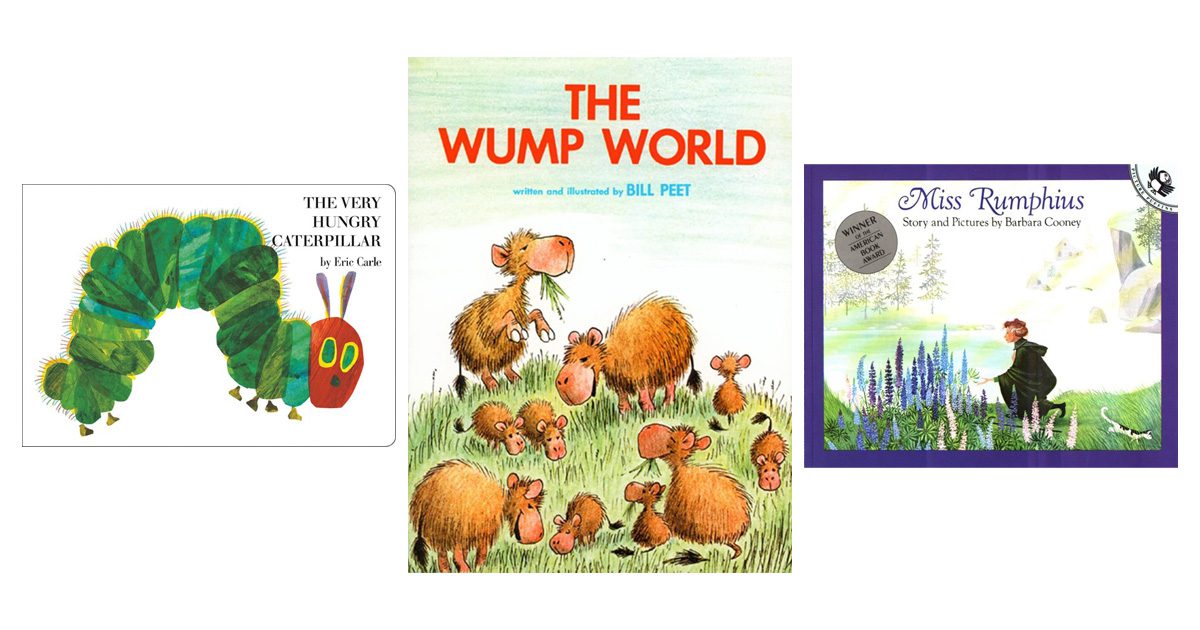
In this brief note, I would like to highlight a few exceptional examples of literature for young children that convey messages of respect for animals and the environment. One of my personal favorites is a Bill Peet book – The Wump World (1970). This book tells the story of the virtual destruction of an idyllic world inhabited by the fictional Wumps. The Wump planet is discovered by the Pollutants (aliens who resemble humans in looks, manner, dress, and behavior), who soon cover the meadows with buildings and roads and pollute the lakes and rivers. Eventually, the world becomes so despoiled that the Pollutians depart for another (better) planet. The Wumps tentatively emerge from the underground caverns where they had taken refuge and start looking for a remnant of their world. Eventually, they find a small park that is not polluted or built over. Over time, the buildings and roads begin to crumble, and the final illustration depicts a Wump observing a plant that has sprouted through the concrete and tarmac. This book is one of my favorites because the moral resonates with adults and children alike. If we do not treat our environment and animal life with care, the result will be an unlivable world. This book also concludes on a message of hope, which is particularly important today, given the climate change scenarios—that if we give the environment a chance, we can recover some of what is lost.
The idea that the natural world can bring great joy, rather than providing material things, is highlighted in Miss Rumphius, The Lupine Lady, by Barbara Cooney, published in 1982. As a small girl, Alice Rumphius would listen to her grandfather’s stories of faraway places and dream of traveling all over the world and then retiring to a place by the sea. Her grandfather would always tell her that travel was all very well, but she must also accomplish another goal: to leave the world a more beautiful place. Miss Rumphius decided to spread lupine seeds, and in spring, the profusion of blossoms brightens the lives of those in her community. The story of Miss Rumphius was inspired by Hilda Hamlin, the real-life “Lupine Lady” who secretly spread lupine seeds along the coast of Maine.
Everybody will have their own favorites among the books they read to their children or had read to them as children. There is a timeless appeal to these books. From Aesop to Eric Carle’s The Very Hungry Caterpillar, these stories have great potential to encourage children’s awareness about the well-being of people, animals, and the environment. But please also remember to encourage your children to explore the natural world around them, or to seek out natural spaces if they live in high-density cities.
Multiple research reports indicate the importance of nature for children and the development of healthy adults. For example, a 2019 Danish study reports that children who grew up close to nature (whether a small city park or the countryside) had fewer mental health issues as adults compared to those whose surroundings were mostly built structures. A mother recently reported that nature is her ally when raising her children, and a 2024 report in The Washington Post describes how time spent in nature helps children manage stress and promotes healthy growth.
Animal characters in books for young children and books celebrating nature will probably not replace exposure to actual nature, but such books certainly provide a great deal of pleasure (for both parents and children) while exposing children to important moral lessons that will serve them and the larger environment as they mature into adults.