


Feb 19, 2026 Animals in Advertising
According to the National Football League (NFL), this year’s Super Bowl LX, the final game of the NFL season that determines the world champions of American football, was viewed in the US by nearly 125 million people. The halftime show generated over four billion global social media views within the first 24 hours after the performance.
However, the Super Bowl is more than just a football game; it also serves as a platform for companies to showcase their costly new commercials, with a 30-second spot during Super Bowl LX costing $8 million. Animal spokespersons have been perennial favorites, appearing in 27% of ads since 2010, surpassing children, who appeared in 24%.
Budweiser, the beer brand owned by Anheuser-Busch, has a long-standing tradition of featuring animals in its advertisements. One notable ad from 1995 showcased three frogs sitting on lily pads, croaking “Bud,” “Weis,” and “Er.” The ad concluded with a camera pan that revealed a neon Budweiser sign above the lily pond.
In 2026, Budweiser aired a commercial featuring a young Clydesdale foal—traditional horses used for delivering Budweiser beer—and a baby bird. The bird turned out to be a baby bald eagle, which is the national bird of the United States. The ad ended with the eagle perched on the horse’s back, spreading its wings as the horse jumped over an obstacle, creating a dramatic Pegasus-like image.
The Clydesdales have been a beloved feature in Budweiser ads, appearing forty-eight times across sixty Super Bowl broadcasts.
Animal spokespersons convey implicit values associated with the products they promote. For instance, Clydesdales, as spokes-animals, suggest that Budweiser is a natural choice that will provide strength to consumers. Exxon has traditionally advertised its gasoline with the catchy phrase “put a tiger in your tank,” accompanied by tiger imagery. This campaign began in Britain in 1953, encouraging consumers to break free from gasoline rationing. Initially featuring a ferocious tiger, the image was later softened into a friendlier, more playful character. This change helped the campaign resonate with the public, effectively communicating that Exxon’s gasoline offered power, energy, and strength.
Joseph Heimbold, an independent marketing executive, proposed to Exxon that they create whimsical “tiger tails” for vehicles. Ultimately, a quarter of a million “tiger tails” were sold to automobile owners.
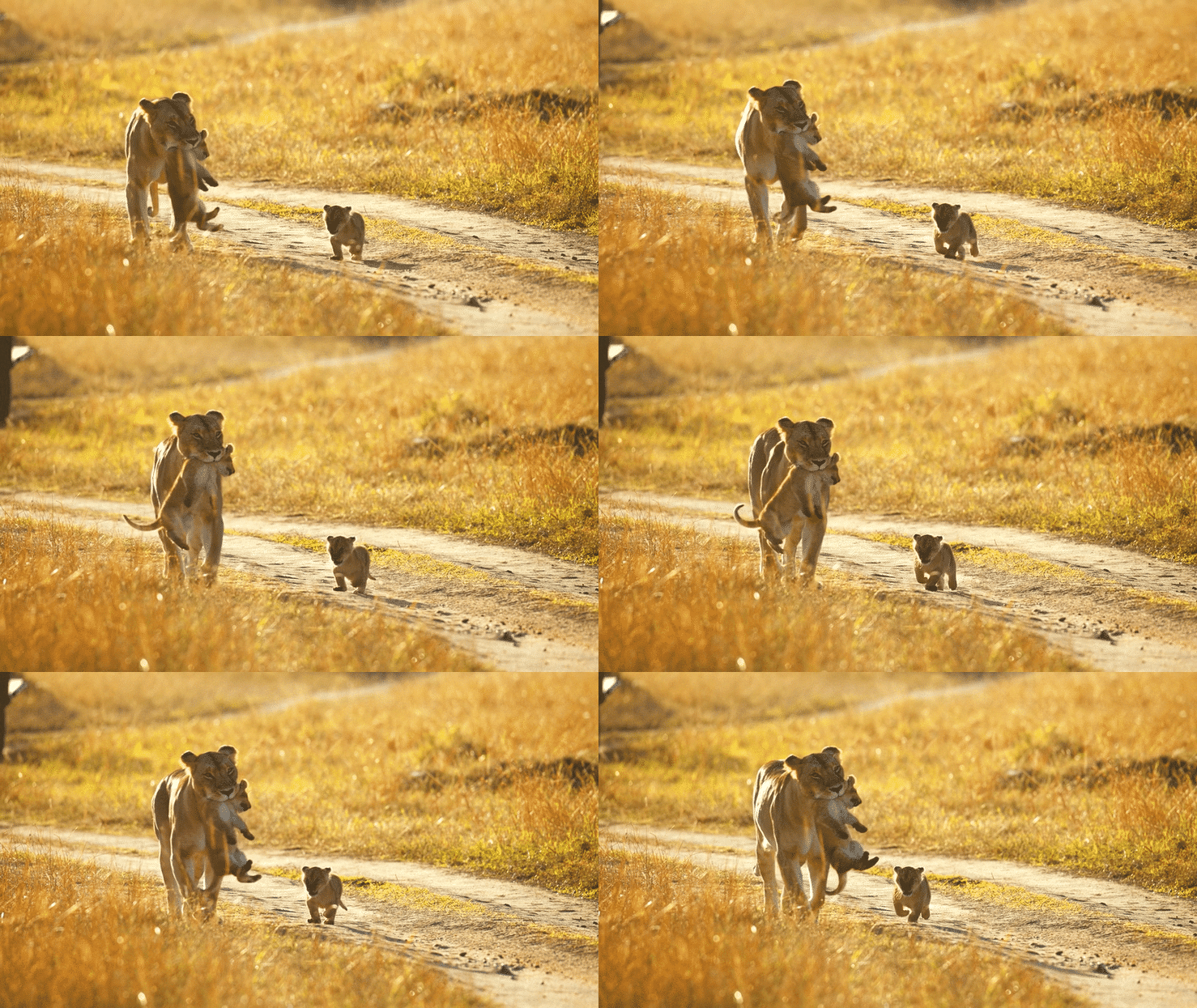
Animals have a unique ability to capture human attention and evoke emotions. For instance, consider the lead video for this article, which could be used to promote the purchase of a double stroller. The ubiquitous teddy bear is a classic example of how the meanings associated with a particular animal can profoundly impact people. Many police cars, for example, carry a teddy bear or other plush toy to comfort children and adults involved in accidents or traumatic events.
An acquaintance’s husband once delivered a Sunday sermon on the healing power of teddy bears, handing out small teddy bears to parishioners at the end of the service. Adults eagerly climbed over pews to collect one of the teddy bear handouts, and the preacher remarked that he had never seen so many smiles among his parishioners as they left the church.
The internet has given rise to a new category of animal representatives—animal influencers on platforms like Instagram and TikTok. Notable examples include Nala the Cat, who has 4.5 million followers on Instagram, and MochaPom, a Pomeranian with 14.4 million followers on TikTok. These pet influencers significantly enhance consumer engagement and spending, particularly in the pet product market. On average, TikTok pet influencers have about four times as many followers as those on Instagram.
A recent study explored why pet influencers achieve higher engagement rates and discovered that they are perceived as more credible than their human counterparts. One key factor contributing to this credibility is their whimsical nature. This whimsicality has also contributed to the AFLAC duck’s success, leading to a surge in name recognition for the AFLAC insurance company—from just 4% to 90%—a few years after the duck was introduced in 2000.
Despite the frequent use of animal characters in advertising, there has been limited academic research on why and how these animal spokespersons capture attention and convey meaning. While conferences on the human-animal bond occasionally feature speakers discussing this topic, it remains an understudied area of consumer behavior. Those interested in exploring this subject further are encouraged to read Steven Baker’s book, Picturing the Beast: Animals, Identity, and Representation. Although it is theoretically rich, it offers a very readable examination of how cultural imagery influences the treatment of animals.
Video credit: SimonSkafar, iStock