


Oct 08, 2025 Combatting Wildlife Smuggling
The August 2025 edition of National Geographic dedicates a cover article to the important topic “On the Hunt for Smugglers”. The subtitle argues that novel technologies and fresh crime-fighting techniques are transforming the battle against wildlife trafficking, one gorilla handprint at a time.
The article dives into the global poaching crisis, highlighting a staggering $23 billion wildlife trafficking industry and addressing how forensic science is increasingly at the forefront of combating these crimes. The cover article by Berlin-based Joshua Hammer profiles cutting-edge forensic tactics—from DNA sequencing to gorilla fingerprinting—used to trace poached animal parts, identify criminal networks, and potentially deter future wildlife crime. Taking a leaf out of the US CSI (crime scene investigations) television series, this could be titled “CSI: in the Bush.” The article describes the increase in poaching and takes the reader from Thailand to Zimbabwe. The author explains that poachers were hiring lawyers to fight their indictments in court, where they explicitly asked for scientific proof that the defendants were engaged in wildlife smuggling.
Hammer blends rigorous science with narrative flair, making complex forensic techniques accessible and engaging. Addressing wildlife crime through forensic innovation offers both relevance and tangible hope. Including the personal stories, such as the gorilla fingerprinting project, humanizes the battle against poachers.
Hammer writes, “In South Africa, poachers slaughtered 10,334 rhinos, both black and white, between 2006 and 2024, the equivalent of two-thirds of the country’s entire population. The majority of horns end up in Vietnam and China, where they are carved into decorative objects or ground into medicine. Africa’s elephant population dropped from 472,269 to about 415,000 after the Convention on International Trade in Endangered Species in 2008 permitted a onetime sale of ivory to China, stimulating demand and opening the floodgates for laundered tusks.” The author also references international trade in parts from tigers, snow leopards and other species.
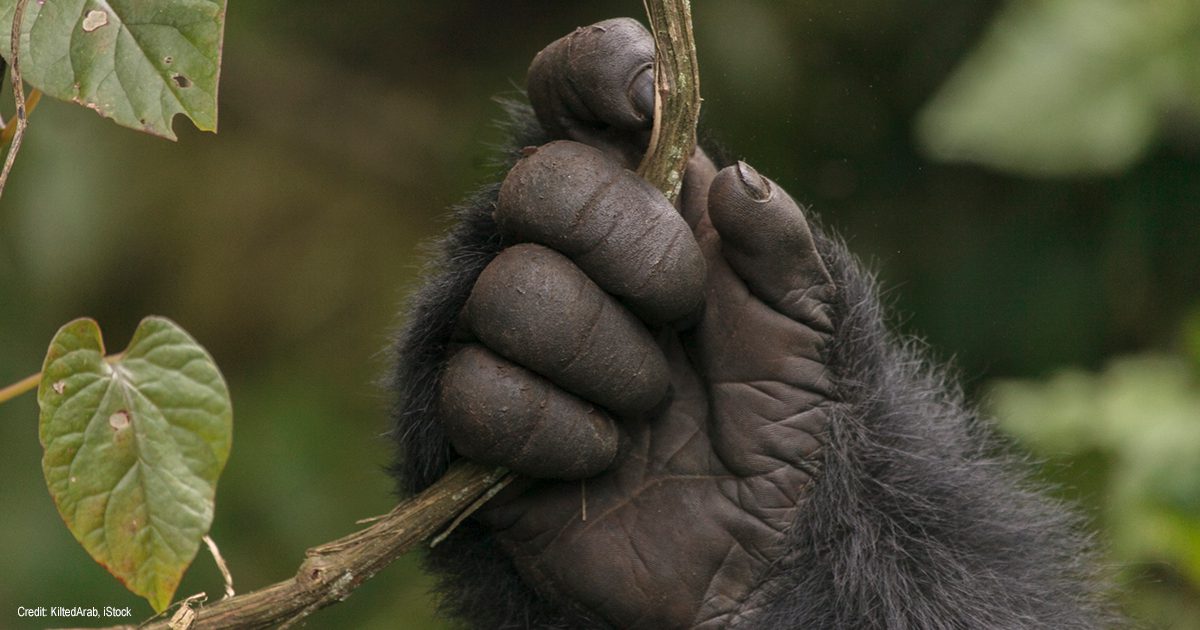
Hammer writes how the International Fund for Animal Welfare, in partnership with the UK’s Foreign and Commonwealth Office, distributed a hundred fingerprinting kits to police and rangers in twenty-three countries in Africa and Asia, leading to many arrests. One poignant project involves photographing the ridge patterns on gorilla hands and feet—from museum specimens and individuals in captivity—to match these prints with seized remains, aiming to trace poaching hotspots and traffickers.
Wildlife smuggling has become a central area of activity for organized crime groups that had already established sophisticated systems to move contraband (whether drugs, arms, humans or wildlife) across national borders. Smuggling wildlife can be very profitable (Interpol estimates illegal wildlife trade could generate $20 billion annually), and the penalties are typically not significant enough to deter the illegal trade. Interpol first became involved in investigating wildlife smuggling in 2017 and has now mobilized law enforcement authorities from more than 100 countries as part of its Operation Thunder against the illegal wildlife trade. For example, early in 2025, authorities arrested 365 suspects and identified six transnational criminal networks suspected of trafficking animals and plants protected by CITES.
The article recognizes that many techniques, such as gorilla fingerprinting, may be promising but still need further development. However, a 2024 article on the American Association of Zoos and Aquariums website describes how technology is transforming efforts to prevent the poaching and smuggling of endangered wild animals and plants. For example, Wildlife Protection Solutions promotes innovative technological solutions to safeguard endangered species, while AI is helping to identify which airports are hotspots for wildlife trafficking. The paper’s lead author, Hannah Murray, describes this result as a PhD student at the University of Southern California’s Center for AI in Society. She comments that she was attracted to USC because of the opportunity to explore AI’s potential to benefit society. However, there is a developing debate over whether AI could be a positive or negative factor for animal well-being. The early results indicate that AI has a positive impact on vulnerable wildlife.