


Jan 25, 2026 The Use of Nature Words in Everyday Language
In 2002, Google launched an ambitious project to scan a large portion of the world’s books and create a digital library accessible to everyone. However, this library has not yet materialized due to legal challenges from authors and publishers. Although the public cannot currently access the estimated forty million scanned books, the database has proven to be a valuable resource for various types of research. For instance, the Google nGram Viewer allows users to track the frequency of specific terms in books published over time.
For example, in 2022, the term “animal welfare” appeared twice as often as “animal rights” and seven times as often as “animal protection” in the scanned books. The nGram Viewer shows a significant 6- to 7-fold increase in the use of the term “animal welfare” in books published after the mid-1970s, following the publication of Peter Singer’s Animal Liberation and the subsequent growth of the animal rights movement.
Miles Richardson, a psychologist at the University of Derby, used Google’s nGram Viewer to track the frequency of twenty-eight descriptive words related to nature (such as ‘bud’ and ‘meadow’) in published books starting from 1800. He found that the frequency of these terms in English-language books steadily declined from 1800 to 2020, decreasing by approximately two-thirds. As Richardson noted in a blog post about the study, these nature-related words “reflect what people noticed, valued, and wrote about” at various times from 1800 to the present. Thus, the frequency of these nature words serves as a proxy measure of people’s connection to nature and the natural world. To further analyze this decline, Richardson developed a computer model to simulate the long-term decrease in nature connection from 1800 to 2020 and then tested it against actual data.
The computer model he developed simulates the extinction of experience—a cycle in which the loss of nature leads to decreased connection to nature, which is then passed on to future generations. I suspect that many of us in the later stages of our lives can relate to the changes Richardson describes. I grew up surrounded by nature, spending my early years on an island in the middle of the Atlantic Ocean, alongside 250 other residents. One Christmas, we sent a card to friends in South Africa that featured a photograph of me, at three years old, lecturing a nesting Yellow-nosed Albatross on Nightingale Island. When my parents and I returned to Cape Town, I spent the next ten years exploring the mountains of the Cape Peninsula during school vacations and on weekends, simply by stepping out of our front door. Since that time, my experiences with nature have become more limited, primarily involving urban and suburban environments.
Richardson’s computer model can predict ways society might reverse the decline in connection to nature, an issue Richard Louv identified in 2005 as Nature Deficit Disorder. Richardson argues that being detached from nature is at the root of the environmental crisis since people will not value what they do not know and experience. He cites as evidence of this disconnection The Transformative Change Assessment report released by the Intergovernmental Science-Policy Platform on Biodiversity and Ecosystem Services (IPBES) in December 2024.
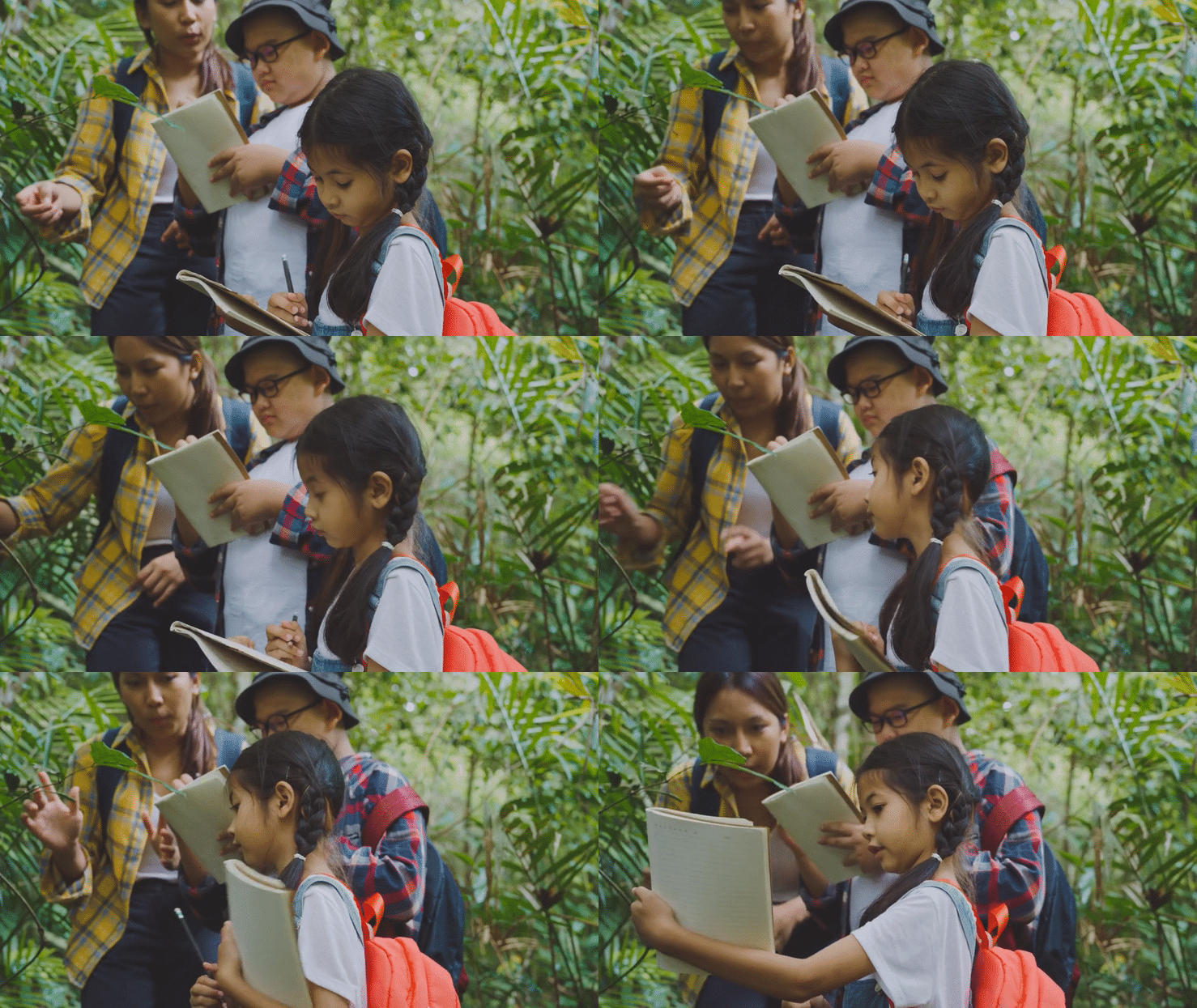
In his blog, Richardson poses an important question: if we are unaware of how our connections to nature have diminished, how can we identify the steps we need to take moving forward? He suggests several strategies to strengthen our relationship with nature. These include enhancing intergenerational engagement by providing resources for nature-focused parenting and establishing peer networks to promote the cultural transmission of nature appreciation. Additionally, he emphasizes the need to prioritize urban greening and access to natural spaces, as well as monitoring nature connectedness to inform adaptive, evidence-based policies. Achieving long-term cultural change will be essential.
Fortunately, a growing number of studies highlight the significant beneficial impact of nature on human health. For instance, Ulrich’s 1984 study on patients who had their gallbladders removed was one of the first to demonstrate the positive effects of nature exposure. Since then, the body of scientific literature on the health benefits of nature has grown significantly and become increasingly complex. One key question is how to quantify a beneficial “dose” of exposure to nature.
Exposure to nature appears to contribute to better health by reducing stress and anxiety, improving physical health, and enhancing cognitive function. Doctors are now specifically prescribing time in nature for their patients. However, it is important to note that you do not need a doctor’s prescription to benefit from nature. Simply take the initiative to reduce stress and improve your own health by seeking opportunities to walk in natural settings and engage with nature in other meaningful ways.
Video Credit: JB2022, iStock